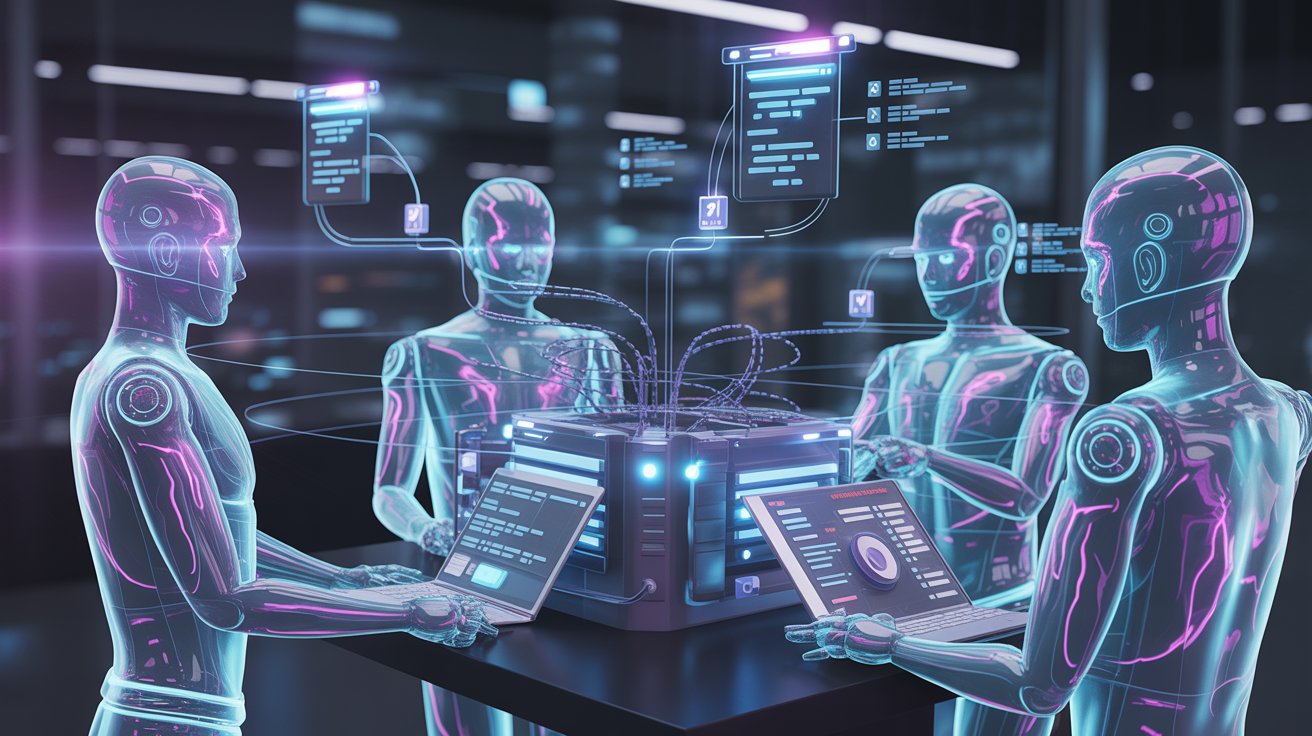
The Chatbot Era Is Over.
The Age of AI Agents Has Begun.
When ChatGPT exploded into public consciousness in late 2022, most people treated it like a smarter search engine — a tool for drafting emails, summarising PDFs, writing essays, or winning arguments online.
Useful? Absolutely.
But what’s happening now is something far bigger.
We are entering the age of Agentic AI — a technological shift so significant it won’t just change how humans use software.
It will change who — or what — actually does the work.
The Rise of Autonomous Intelligence
A chatbot answers questions.
An AI agent completes objectives.
That distinction changes everything.
Unlike traditional chatbots, AI agents can:
reason through complex goals
break tasks into steps
use external tools
call APIs
browse the web
execute code
analyse data
manage files
refine outputs autonomously
All without constant human supervision.
Think of it this way:
A chatbot is a calculator.
An AI agent is a digital employee with internet access, operational memory, and infinite stamina.
Receive Goal
      ↓
Plan Tasks
      ↓
Select Tools
      ↓
Execute Actions
      ↓
Self-Review
      ↓
Deliver Outcome
That loop — planning, acting, evaluating, improving — is what separates agents from assistants.
And it’s why this moment matters.
Reasoning Changed the Game
The breakthrough powering modern agents is reasoning.
Today’s leading AI systems from companies like OpenAI, Anthropic, and Google DeepMind can now deconstruct high-level objectives into executable workflows.
Give an agent a command like:
“Research competitors, analyse market positioning, and generate an investor-ready report.”
And it can:
gather data
compare findings
generate analysis
create charts
write summaries
validate outputs
revise weak sections
deliver finished work
That is no longer autocomplete.
That is operational cognition.
The Real Disruption: Multi-Agent Systems
And even that is only the beginning.
The frontier of AI is no longer a single assistant.
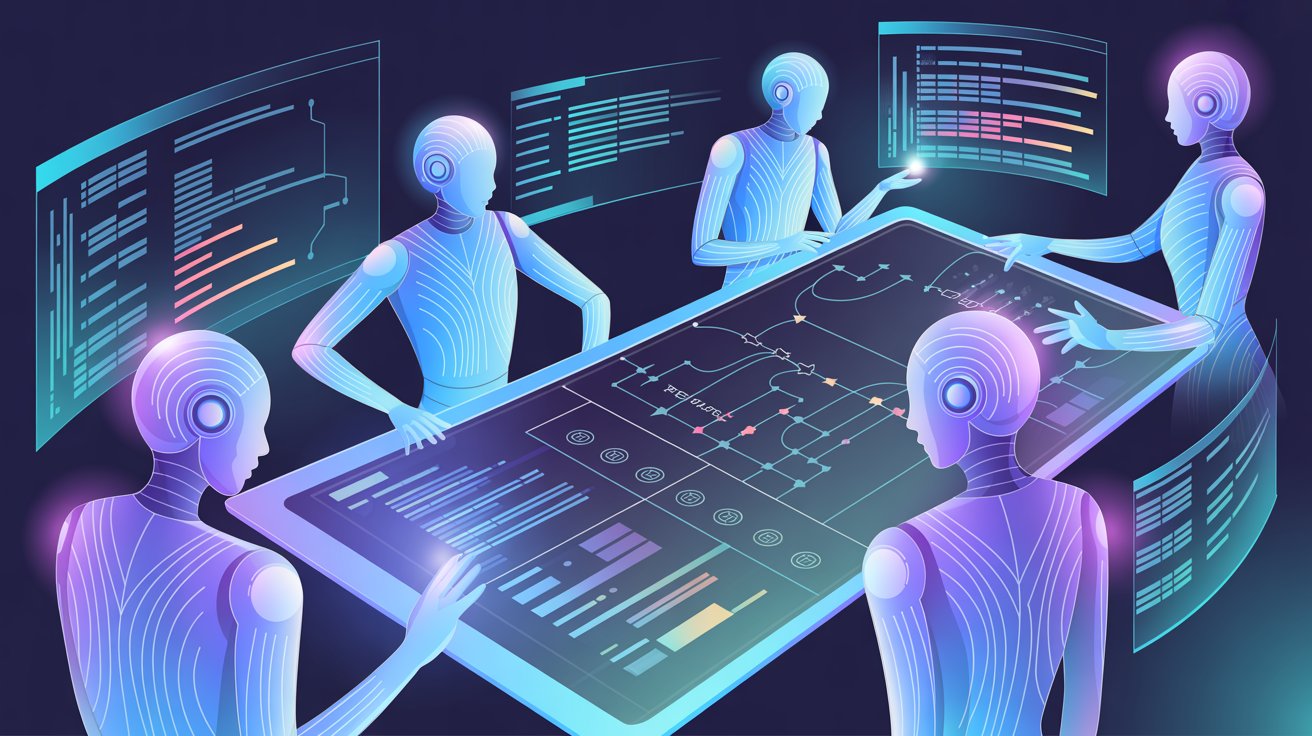
It’s coordinated systems of specialised agents working together in parallel.
Imagine a product launch run almost entirely by AI:
One agent monitors competitors.
Another tracks social sentiment.
Another drafts the press release.
Another generates ad copy.
Another runs A/B testing.
Another schedules campaigns.
Another analyses performance in real time.
No meetings.
No bottlenecks.
No operational drag.
Just autonomous systems aligned around outcomes.
This is the emerging Agent Economy — and it’s already being deployed inside startups, enterprise software stacks, research labs, and Fortune 500 operations worldwide.
Where AI Agents Are Already Replacing Workflows
Software Development
AI systems now write, debug, test, document, and deploy code with minimal human intervention.
Coding assistants are rapidly evolving into autonomous engineering systems.
Business Intelligence
Agents can monitor dashboards, detect anomalies, generate executive briefings, and surface operational risks continuously — including while the company sleeps.
Sales & Outreach
Prospecting, lead qualification, personalised outreach, follow-ups, CRM updates, and scheduling can now be automated end-to-end.
Legal & Compliance
Agents review contracts, flag risky clauses, cross-reference regulations, and accelerate due diligence workflows in seconds.
Customer Support
Tier-1 and increasingly tier-2 support functions are being automated at scale, with humans handling only edge cases and escalations.
Content & Media
Research, briefing, drafting, SEO optimisation, publishing, distribution, and analytics can now operate through AI-driven content pipelines with dramatically reduced headcount.
The Uncomfortable Question
There’s one question quietly reshaping boardrooms and hiring plans across the global economy:
If an AI agent can do in four minutes what a junior employee does in four days — what happens to the role?
For decades, knowledge workers believed cognitive labour was protected from automation.
Factory jobs would disappear first.
Manual labour would be disrupted first.
Creative and analytical work would remain human.
That assumption is collapsing in real time.
The machines learned the cognitive layer too.
The Governance Crisis Nobody Is Ready For
Despite the speed of adoption, regulation remains dangerously behind.
There are still no globally accepted frameworks defining:
what AI agents are legally allowed to do
who is liable when they fail
how decisions should be audited
how autonomous actions should be governed
how enterprises should maintain oversight
Companies are deploying increasingly autonomous systems into a regulatory vacuum.
That gap will not remain harmless forever.
Why This Matters for Africa
Most Western coverage frames agentic AI as a threat to existing industries.
But for emerging markets — especially across Africa — the story may be radically different.
Many African businesses already operate under constraints:
lean teams
limited capital
infrastructure gaps
operational inefficiencies
limited access to specialised talent
Agentic AI changes the economics of capability.
A startup in Nairobi can deploy procurement agents, customer support systems, operational analysts, and reporting infrastructure without building massive departments.
A logistics company can automate supply chain oversight.
A fintech startup can deploy AI-driven compliance monitoring.
A media company can run intelligent content operations at global scale.
In many cases, AI agents are not replacing large workforces.
They are enabling capabilities that previously didn’t exist.
That is leapfrogging.
What Organizations Should Do Right Now
1. Audit Workflows Immediately
Any process that is repetitive, structured, rules-driven, or heavily dependent on data is vulnerable to automation.
Map it now before competitors redesign the workflow around agents first.
2. Learn Agent Orchestration
The next critical skill is not simply coding.
It is defining goals, constraints, instructions, safeguards, and evaluation systems for autonomous AI workflows.
The organisations that master orchestration will outperform the ones still thinking in prompts.
3. Build Governance Before Scale
Companies rushing agents into production without oversight mechanisms are creating future operational disasters.
Audit trails, approval systems, logging, human review layers, and accountability structures are no longer optional.
They are infrastructure.
The New Operating System for Work
The agentic revolution is not a future scenario.
It is already underway.
Right now, AI agents are being integrated into workflows, replacing operational tasks, accelerating execution, and reshaping the economics of knowledge work across industries.
The question is no longer whether disruption is coming.
The question is whether your organisation will build with it — or compete against those who already are.
Because the agents are no longer waiting for instructions.
They’re already working.