
Good morning. 
If procrastinating on buying your Moonshot ticket were an Olympic sport, some of you would be bringing home medals. 
On October 28–29, the National Theatre in Lagos, Nigeria, will convene the founders, investors, operators, and builders shaping Africa’s tech ecosystem.

Read smart insights about Francophone Africa’s tech ecosystem—weekly.
Subscribe
- Nedbank completes NCBA takeover
- Why Onafriq shut down its Nigerian agent banking business
- Union calls for Temu, Shein ban in SA
- Camtel, Socadel to collaborate in Cameroon
- World Wide Web 3
- Opportunities
M&A
Nedbank clears the final hurdle to take control of NCBA

Nine months after putting R13.9 billion ($855.5 million) on the table, Nedbank is finally at the end of its NCBA takeover.
The South African lender’s offer to acquire 66% of NCBA Group, one of East Africa’s largest banking groups, is now unconditional after clearing the remaining regulatory approvals.
Settlement begins this week, with the transfer of shares to Nedbank expected from early November. NCBA will become a Nedbank subsidiary, but keep its name, Nairobi headquarters, management, and Nairobi Securities Exchange (NSE) listing, according to its Monday filings.
Catch up: Nedbank first announced the deal in January. In February, Kenya’s capital markets regulator allowed it to buy 66% without making an offer for the entire company. The tender opened in May, and by July, shareholders had offered 79.9% of NCBA’s shares, more than Nedbank wanted. Those offers had to be scaled back to 66%.
Shareholders who sell will receive 80% of their payment in newly issued Nedbank shares and 20% in cash. The remaining 34% of NCBA will stay in public hands.
Between the lines: Nedbank is buying more than a Kenyan bank. NCBA already operates across Kenya, Uganda, Tanzania and Rwanda, with digital businesses in Ghana and Côte d’Ivoire. Its digital business accounted for 32% of group profit in 2025, and it disbursed KES 1.4 trillion ($10.8 billion) in digital loans.
The deal also shows how Nedbank’s Africa strategy has changed. In 2025, it sold its 21% stake in Ecobank and shifted towards markets where it can control the banking operation rather than remain a minority investor. NCBA gives it that control, plus customers, licences, and infrastructure across East Africa, without building them country by country.
What to watch: Nedbank has previously talked about using NCBA as a springboard into Ethiopia and the Democratic Republic of Congo (DRC). Now it has the platform to try.



Your success and ours are the same story. Happy Customer Service Week. This year’s theme is The Extra Mile, and it’s the only way we know how to do this. Visit: fincra.com.
Fintech
Why Onafriq shut down its Nigerian agent banking business
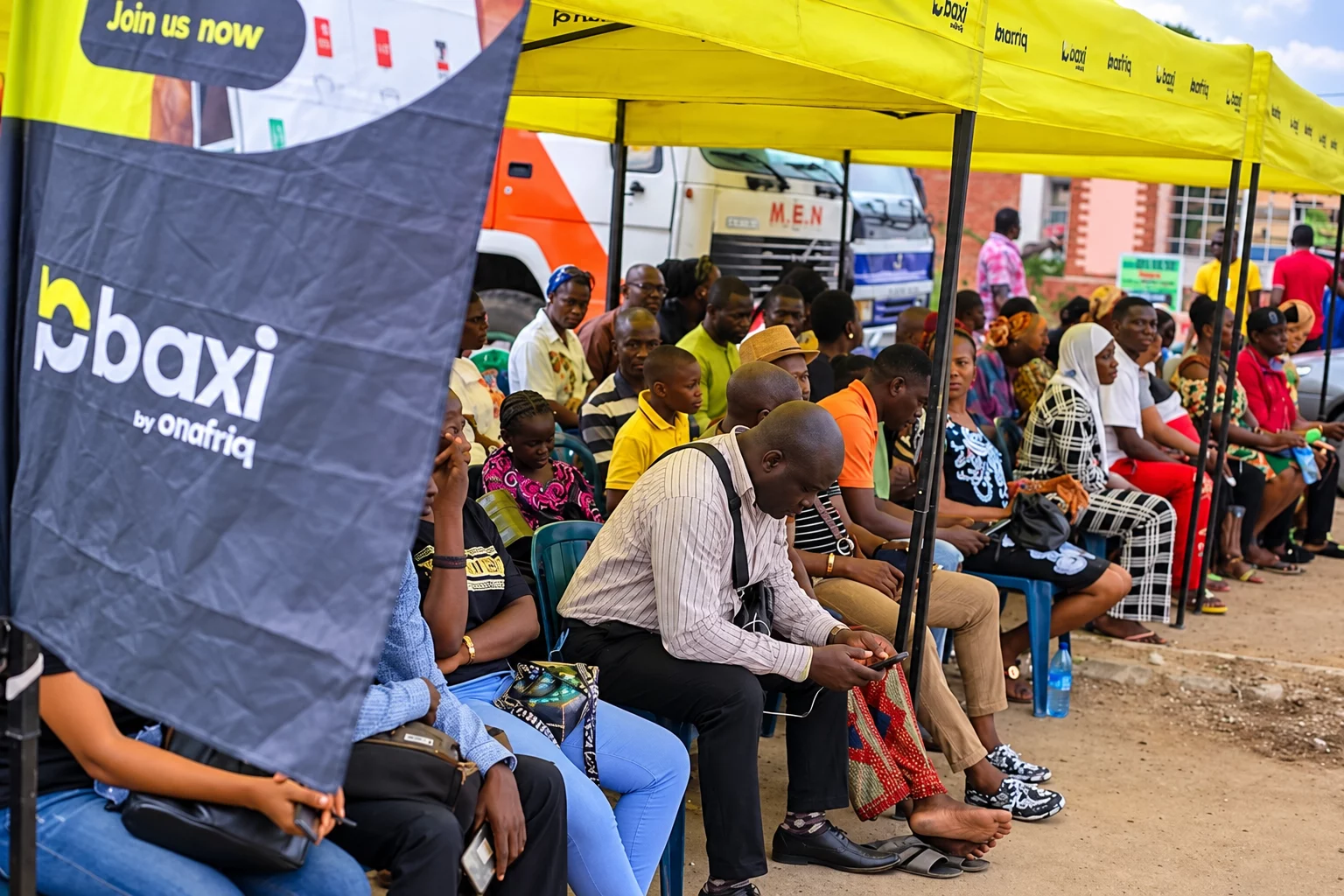
In hindsight, it is not hard to see the play Onafriq, the pan-African payments company, was making when it expanded into Nigeria by acquiring Baxi in 2021.
Nigeria still relied heavily on cash, and Baxi already had more than 90,000 agents. Onafriq could enter with a ready-made distribution network instead of spending years building one.
The timing looked good, too. OPay and Moniepoint had begun building large agent networks in 2019, while PalmPay entered agent banking later. In 2021, Baxi was already one of Nigeria’s biggest independent agent networks, giving Onafriq an early lead over some newer competitors.
But the lead did not hold. By the end of 2024, PalmPay reportedly had more than 700,000 agents, while Moniepoint had over 800,000 point-of-sale (PoS) terminals. But as of 2025, Baxi had just over 460,000 agents, paling in comparison. In October, it finally decided to shut down the business, months after trying to sell Baxi.
Between the lines: Agent banking became a scale game. Rivals poured money into terminals, agent recruitment, and incentives, making it easier to close the distribution gap. At the same time, agents could work with several providers, making a large network less defensible than it first appeared.
The economics also changed. More terminals entered the market much faster than transaction volumes grew, so providers competed over the same payments.
Meanwhile, account-to-account (A2A) transfers—direct bank payments—gave customers another way to move money without visiting an agent.
Onafriq’s attempt to sell Baxi before shutting it down shows that the problem was bigger than one bad year. The company had already decided the agent business no longer fit where it wanted to put capital.
Zoom out: Onafriq bought Baxi partly because physical distribution was scarce. Five years later, the market had plenty. Being early gave Baxi a head start, but it did not stop competitors from catching up and, eventually, passing it.

Class of 2016, stand up! Meet the storytellers behind a decade of storytelling for African tech. 230+ startups, VCs, and more. From first cheques to unicorns. Have a story to tell? Let’s make it count. #TheWimbarts
Ecommerce
South African union want Shein and Temu banned to protect local jobs

Behind the low-cost tops you see on Shein and Temu is a dispute over how foreign shopping platforms compete with local businesses, and what that means for the people who make and sell clothes in South Africa.
What happened? The Congress of South African Trade Unions (COSATU), the country’s largest trade union federation, wants South Africa to ban Shein and Temu. It backed a proposal from the Southern African Clothing and Textile Workers’ Union (SACTWU), which says the platforms hurt local jobs by undercutting domestic retailers and manufacturers.
Explain like I’m new here: Shein entered South Africa in 2020, while Temu followed in 2024. Both sell directly to consumers online, offering a wide range of clothing and other goods at prices that traditional retailers can find hard to match. A 2025 study by the Localisation Support Fund (LSF), a South African organisation focused on strengthening local production, estimated that Shein and Temu generated R7.3 billion ($444 million) in South African sales in 2024, equivalent to roughly 3.6% of the country’s retail market.
Can South Africa ban them? South Africa has already taken steps to narrow the tax advantage to benefit some low-value imports. Previously, goods worth less than R500 ($30.41) were cheaper to bring into the country. In 2024, the South African Revenue Service (SARS), the country’s taxman, introduced value-added tax (VAT) on low-value imports and subsequently ended their special customs-duty treatment.
However, COSATU’s proposal goes further than changing tax rules. If both platforms are banned, some consumers could pay more without automatically creating new jobs in local factories. South Africa still has to work out how to protect local jobs while allowing competition and preserving affordable choices for shoppers. Closing tax loopholes is one part of that effort; making local manufacturers more competitive is another.

True scale demands moving beyond surface-level integrations to robust execution. We’ve filtered the noise out of Moonshot 2026, optimising the conference strictly for high-calibre connections between startup founders, global financial operators, enterprise leaders and individuals rewiring Africa’s technical frameworks. Join us on October 28 & 29, 2026. Get your ticket.
Telecoms
Cameroon wants to put more Internet on its electricity poles
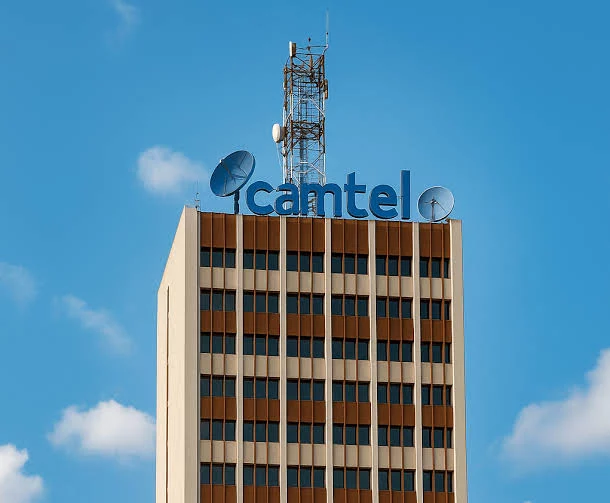
Building a fibre-optic network requires a place to lay the fibre, permission to use the land, and a lot of money. But what if the poles that already carry electricity could also help carry the Internet? Cameroon is exploring that option.
What happened? On October 16, Camtel, Cameroon’s state-owned telecoms operator, and Socadel, the country’s electricity provider, signed a memorandum of understanding (MoU) to explore sharing infrastructure for fibre deployment.
How would it work? Camtel has the fibre network and telecoms expertise, and Socadel has electricity infrastructure, such as utility poles and rights-of-way. Instead of Camtel building entirely new infrastructure to carry fibre cables, it could attach overhead cables to suitable electricity poles and use existing routes to reach more locations. The two companies will now study whether they can combine those assets for faster Internet access.
Cameroon has tried this before: In 2023, the government transferred about 812 kilometres (km) of overhead fibre that Eneo, Socadel’s predecessor, had installed on electricity poles along Cameroon’s southern interconnected grid to Camtel.
That network served major cities including Douala and Yaoundé, its capital, and added to Camtel’s fibre infrastructure, which stood at about 12,000km. The latest agreement focuses on closer infrastructure sharing, including the possibility of incorporating fibre into future electricity infrastructure projects.
What happens next? The companies have not yet announced a nationwide rollout or a specific number of new kilometres. Their immediate job is to determine where the arrangement makes sense and identify pilot sites. If the model works, Camtel could expand fibre routes without building every supporting telecom structure from scratch, reducing deployment costs.
CRYPTO TRACKER
The World Wide Web3
Source:

Coin Name
Current Value
Day
Month

+ 1.94%
+ 8.23%
+ 4.12%
+ 1.79%
+ 3.17%
+ 3.33%
+ 4.13%
+ 9.07%
* Data as of 06.54 AM WAT, October 19, 2026.
Opportunities
- Applications open for Her Startup’s second cohort: Her Startup is accepting applications from women-led tech startups across Africa for its 2026/2027 accelerator programme. Ten selected founders will receive 12 weeks of training, monthly stipends, mentorship, and an opportunity to access funding. Applicants must be women aged 18–35 running tech-enabled businesses that have operated for at least six months and generate at least $500 in monthly revenue. Applications close October 26. Apply here.

- Nigeria’s financial inclusion is growing, but access to credit still lags
- How Five35 Ventures made 3.5 times its investment on Complete Farmer
- Will developing nations be able to handle millions of AI agents?
Written by: Emmanuel Nwosu and Yemi Kareem
Edited by: Emmanuel Nwosu & Ganiu Oloruntade
Want more of TechCabal?Sign up for our insightful newsletters on the business and economy of tech in Africa.
- The Next Wave: futuristic analysis of the business of tech in Africa.
- Francophone Weekly by TechCabal: insider insights and analysis of Francophone’s tech ecosystem
P:S If you’re often missing TC Daily in your inbox, check your Promotions folder and move any edition of TC Daily from “Promotions” to your “Main” or “Primary” folder and TC Daily will always come to you.