

Happy salary week. 
A few readers wrote back to say they couldn’t access the Citi Foundation funding link. We’ve fixed that. The foundation is offering up to $500,000 to organisations building solutions that prepare young people for AI. Apply by October 6.
Reminder: We’re looking for stories from people whose journeys changed at Moonshot. Met a co-founder, investor, partner, or future employer there? Tell us about it.
Let’s get into today’s dispatch.
Read smart insights about Francophone Africa’s tech ecosystem—weekly.
Subscribe
- NSE eyes Dangote Refinery IPO
- Safaricom weighs in on stake-sale saga
- Investec’s expensive UK expansion
- Safaricom hit 1 million fibre subscribers
- World Wide Web 3
- Opportunities
Capital Markets
Kenya wants a slice of Dangote’s landmark oil listing

Africa’s largest initial public offering (IPO) is officially underway in Lagos, Nigeria. Dangote Petroleum Refinery opened a ₦2.15 trillion ($1.6 billion) share sale on September 14, valuing the massive facility at ₦63 trillion ($47.6 billion).
Catch-up: In May, Aliko Dangote, Africa’s richest man, teased a secondary listing on the London Stock Exchange, but management recently paused international debuts for three years to build a solid track record. Seeing an opening, Frank Mwiti, chief executive officer of Nairobi Securities Exchange (NSE), is pushing to bring East African investors into the offer before pursuing a future cross-listing in Kenya.
Between the lines: Formal stock exchange cross-listings usually drag on through years of regulatory red tape, yet retail fintech apps are leaping over traditional hurdles. Platforms like Bamboo already enable IPO subscriptions in countries such as Uganda, Tanzania, and Rwanda, while Kenyan fintech Cloud9 allows local retail users to participate directly from their mobile phones.
Mwiti’s strategy smartly leverages this immediate retail enthusiasm first, using bottom-up consumer appetite to create market momentum before tackling the complex regulatory machinery needed for a full cross-listing in Nairobi.
Why it matters: Cross-border equity sales inside the continent remain rare because of strict currency controls and fragmented clearing systems. Retail fintechs and progressive exchange leaders are constructing a linked African capital market without waiting for formal multilateral treaties.
What to watch: Mwiti is using these Lagos talks to construct a broader energy pipeline on the Nairobi floor. Local Dangote supply ventures, renewable energy firms, and fuel logistics operators could follow. Infrastructure projects like the East African Crude Oil Pipeline might eventually tap regional equity markets instead of relying purely on expensive foreign loans.


The business questions you Google, answered by experts. Watch for free .
Telecoms
Safaricom is the latest to weigh in on the Safaricom stake-sale saga
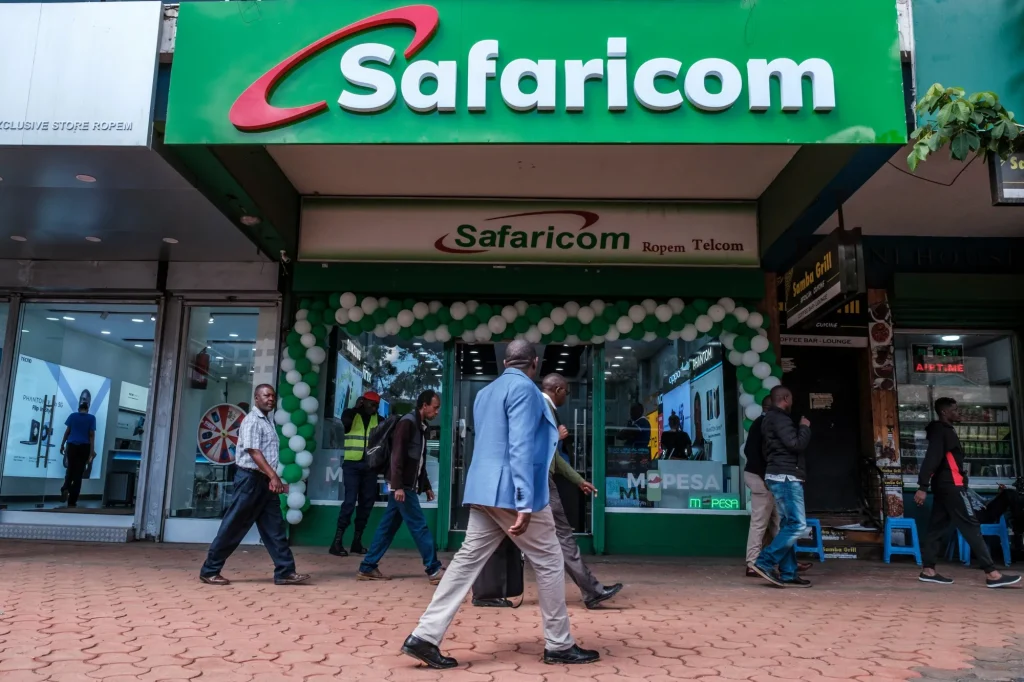
After Kenya’s High Court blocked the government’s sale of a 15% stake in Safaricom to Vodacom on September 15, every party with a vested interest in that deal is now appealing the decision. The latest is Safaricom itself, Kenya’s largest telecom company, the acquiree, which says it is reviewing the judgment and its implications.
What happened? In July, Kenya finalised the sale of its 15% stake in Safaricom to Vodacom for KES 204.3 billion ($1.6 billion). The deal pushed Vodacom’s stake in the telecom company to 55%, giving it majority control. But in September, the High Court declared the sale unlawful and ordered the shares returned to the state.
The ruling has triggered a new round of legal wrangling. Kenya’s government and Vodacom have both said they will appeal, with Vodacom also seeking to pause the court’s order while the appeal is heard. Now Safaricom says it is reviewing the judgment and will provide updates as the legal process continues.
Explain like I’m new here: This is the same deal that has been moving between Kenyan courts for months. In June, the Kenyan Court of Appeal lifted an earlier order blocking the transaction, allowing it to close in July. The High Court has now gone the other way, saying the sale did not meet constitutional and legal requirements around public participation and transparency.
Why does this matter? This is bigger than who owns 15% of Safaricom. The sale gave the Kenyan government KES 204.3 billion ($1.6 million) in cash, while another KES 40.2 billion ($311,000) was paid upfront for rights linked to future dividends from its remaining 20% stake. The government had planned to use the proceeds to fund development projects without adding to public debt.
If the ruling survives the appeal, Kenya could have to unwind the share sale while figuring out what happens to the money it has already received. Vodacom could also lose the 15% stake that gave it majority control.
Zoom out: Safaricom is one of Kenya’s most valuable corporate assets, and M-PESA, its mobile money arm, makes it central to the country’s financial and digital economy. That makes the ownership fight unusually consequential. For now, the company has a majority owner on paper, a court order challenging that ownership, and several appeals still to play out.

True scale demands moving beyond surface-level integrations to robust execution. We’ve filtered the noise out of Moonshot 2026, optimising the conference strictly for high-calibre connections between startup founders, global financial operators, enterprise leaders and individuals rewiring Africa’s technical frameworks. Join us on October 28 & 29, 2026. Get your ticket .
Banking
Investec’s UK expansion is starting to get expensive

Investec’s UK business is starting to look like the awkward part of an otherwise healthy growth story. South Africa’s fifth-largest commercial bank expects its upcoming half-year results to show higher earnings overall, but its UK business is heading in the opposite direction.
What happened? On Friday, Investec said adjusted operating profit at its UK Specialist Bank is expected to fall by 3% to 7% from the previous period. Across the group, however, adjusted earnings per share (EPS) are still expected to reach 7%. South Africa is doing much of the heavy lifting, with operating profit expected to rise 6% in rand terms.
Explain like I’m new here: Investec is a bit unusual. It started in South Africa but now has major operations in both South Africa and the UK. The UK business includes corporate banking, wealth management, and specialist lending. It is also where Investec has been investing heavily to become a bigger, more mainstream bank.
That investment is starting to show up in the numbers. The UK business has been hiring relationship managers and building out its corporate banking team. In July, Investec said it was building a dedicated mid-market team expected to grow to more than 40 relationship managers. The lender appointed Terry Koizou to lead client relationship management at its UK corporate banking arm.
Why now? Investec is not pulling back from the UK. It is doing the opposite. The bank is trying to turn its UK operation into a larger growth engine while also expanding its reach across Europe.
That helps explain its push for an Irish banking licence. Investec already operates in Ireland, but a fuller banking setup would give it more room to serve corporate and wealthy clients across the European Union (EU). Its existing Irish branch is currently an Investec Bank plc branch regulated by the Central Bank of Ireland for conduct of business.
Between the lines: There’s a bet hiding underneath these numbers. Investec is accepting some near-term pressure in the UK as it spends to build a bigger franchise. The question is whether that investment eventually produces enough new clients, lending, and wealth-management income to justify the extra cost.
And South Africa gives it some breathing room. Investec said revenue growth has been supported by higher lending activity and strong inflows into its South African wealth business, where funds under management rose 13.8% since March.
Zoom out: Investec is trying to become less of a South African bank with an international arm and more of a genuinely international specialist bank. The UK is central to that ambition, and Ireland could become another piece of the European puzzle. For now, though, the numbers show expansion is not free.
Telecoms
Safaricom hits a million subscribers as Kenya’s fibre divide widens

Laying cables underground is an expensive business venture. Mobile coverage dominates everyday headlines, yet fixed home broadband offers a major competitive advantage.
Fresh data from the Communications Authority of Kenya (CAK), the country’s telecom regulator, show Safaricom has become the first provider to cross one million fixed subscriptions. At 1,024,950 users, it claims 36.1% of the market. Jamii Telecommunications trails at 19.1%, while former pioneer Wananchi Group retains 10.4%.
Between the lines: The massive gulf highlights how unforgiving physical infrastructure can be. Running last-mile fibre demands relentless capital investment that few balance sheets can sustain over time.
Airtel Africa recently decided to wind up its Kenyan wholesale fibre entity after accumulating losses of KES 16.1 million ($125,000) and generating zero commercial revenue over two years. Airtel targeted enterprise wholesale clients rather than residential households, yet its departure underscores the same economic reality. Running wired networks in Kenya without massive scale leads straight to a dead end.
Why it matters: Locking in one million households gives Safaricom an unbeatable digital runway inside local living rooms. Once fixed Internet is installed, it becomes the essential anchor for smart home devices, streaming services, and digital tools. Competitors find it nearly impossible to convince users to switch.
What to watch: Challengers are turning to wireless technologies to survive. Poa Internet holds 8.8% market share through cheap fixed wireless, while satellite newcomer Starlink holds 1.0%. Even so, in lucrative urban centres, Safaricom has constructed a lead that looks nearly impossible to crack.
CRYPTO TRACKER
The World Wide Web3
Source:

Coin Name
Current Value
Day
Month

+ 1.42%
+ 6.04%
+ 3.41%
+ 9.69%
+ 14..86%
+ 11.49%
+ 2.83%
+ 18.83%
* Data as of 06.30 AM WAT, September 21, 2026.
Opportunities
- The Citi Foundation is offering $500,000 grants to 50 organisations that help low-income young people build AI and other job skills. The grants can support programmes that teach skills such as prompt engineering and digital content creation, help young people find jobs, provide access to devices and software, or add AI tools to existing employment programmes. Applications close on October 6, 2026, at 5 p.m. Lagos time. Apply here.

- These founders turned a lockdown problem into an AI startup
- The banker helping FNB Connect turn cellphones into gateways to everyday life
- The former altar boy and the ‘farming girl’ building Green Eden
- Kenyan fintech Payd to resume services after FX losses disrupt customer payouts
- The case for a robot tax to redistribute wealth
Written by: Emmanuel Nwosu and Kenn Abuya
Edited by: Emmanuel Nwosu & Ganiu Oloruntade
Want more of TechCabal?Sign up for our insightful newsletters on the business and economy of tech in Africa.
- The Next Wave: futuristic analysis of the business of tech in Africa.
- Francophone Weekly by TechCabal: insider insights and analysis of Francophone’s tech ecosystem
P:S If you’re often missing TC Daily in your inbox, check your Promotions folder and move any edition of TC Daily from “Promotions” to your “Main” or “Primary” folder and TC Daily will always come to you.