

Happy Independence Day. 
Our gentle readers, we have three announcements for you this morning. First, the TC Daily product team is improving your newsletter experience. What currently frustrates you about TC Daily? Rant to us—send a reply to this email. We read them.
Second, if you haven’t watched the latest edition of Headlines by TechCabal, you’re really flirting with the idea of becoming our public enemy numero uno. 
Last week, hosts Eme Oreoluwa and Muktar Oladunmade sat down with Shuttlers’ chief executive officer Damilola Olokesusi to discuss mobility in Nigeria. You definitely want to watch that. Go check it out.
Finally, we’re on our knees begging you to take this offer seriously. You can still get 20% knocked off every Moonshot 2026 ticket you buy between now and October 5. It’s already Moonshot month! If your friends don’t have the money to buy tickets, take advantage of the offer, buy for them at discounted prices, and ask for refunds later (stand on business). Hurry and snag tickets to the most important African tech event.

Read smart insights about Francophone Africa’s tech ecosystem—weekly.
Subscribe
- Kenyans may soon be able to buy Dangote shares
- Woolworths is mastering dark store strategy
- JPMorgan hires Sub-Saharan African lead
- Is the JSE catching tech startups young?
- World Wide Web 3
- Opportunities
Capital market
Kenyans may soon be able to buy Dangote Refinery shares
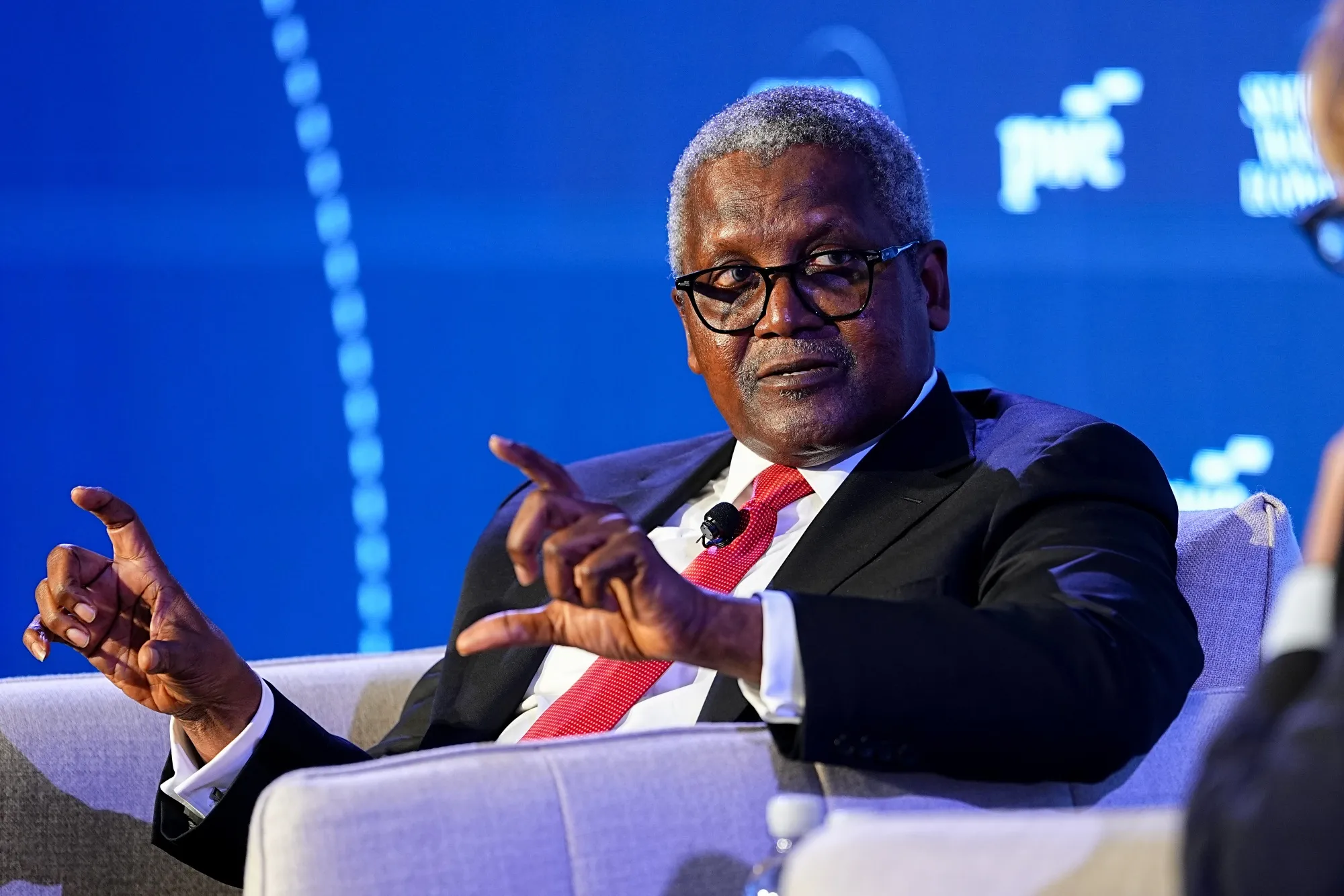
On September 14, Nigerians lined up in a not-so-single-file to buy Dangote Refinery shares in a public offer that bedazzled Nigeria’s popular investment fintechs. But if you thought that IPO rush was strictly a Nigerian affair, think again. Like Captain Underpants, that share sale is now stretching across borders, and Kenya is building a local route for investors who want a piece of the refinery without navigating Nigeria’s capital market.
What happened? Renaissance Capital, a Kenyan investment bank, is working on a new vehicle that would allow Kenyan investors to participate in the Dangote Petroleum Refinery initial public offering (IPO) through Kenya’s stock exchange, for KES 49 ($0.38) per share; minimum purchase starts at KES 490 ($3.78) for ten units. For comparison, the Dangote offer opened to Nigerians at ₦5,250 ($3.96) per ten minimum shares, giving both offers equivalent setup.
The proposed structure would use global depository receipts (GDRs), allowing investors to access foreign company shares without trading them directly on that exchange.
Renaissance Capital would issue the GDRs, representing the Dangote shares listed in Nigeria. The proposal still needs approval from Kenya’s Capital Markets Authority (CMA) and the Nairobi Securities Exchange (NSE).
Explain like I’m new here: Africa’s richest man, Aliko Dangote, built an oil refinery that is currently being offered to the Nigerian investing public at ₦525 ($0.40) per share; the refinery wants to issue 4.1 billion shares to raise ₦2.15 trillion ($1.6 billion) from the capital markets. The offer closes on October 13. Frank Mwiti, NSE’s chief executive officer, pushed to bring Kenyan and East African investors into the IPO rush.
Why does this matter? A local GDR structure could make Nigerian stocks more accessible to Kenyan investors, giving Nigerian companies a wider pool of potential shareholders. It could also create a pathway for capital to move between the two markets without requiring investors to operate directly in a foreign exchange. But would that access translate into significant cross-border investment, deeper trading activity, and more capital for Nigerian businesses?
Markets are finding workarounds: In Zimbabwe, Bard Santner Investors, an asset manager, is facilitating local participation by getting the required approvals, moving clients’ money through Ecobank Zimbabwe to Ecobank Nigeria, and using the latter’s nominee structure to hold the assets and submit the IPO application.
Zoom out: Dangote Refinery’s planned IPO is drawing attention from investors beyond Nigeria, prompting a proposed GDR route into Kenya. But it is hard to know whether other African companies can generate enough cross-border investor interest to make similar structures worthwhile. The timing is also impeccable: on Wednesday, Dangote launched plans for a $16 billion refinery in Lamu, Kenya, despite protests. The project had initially hit a wall after a Kenyan court halted work following a land dispute. For now, Dangote’s IPO may be an unusually strong litmus test for connecting African investors to companies listed in other African markets.


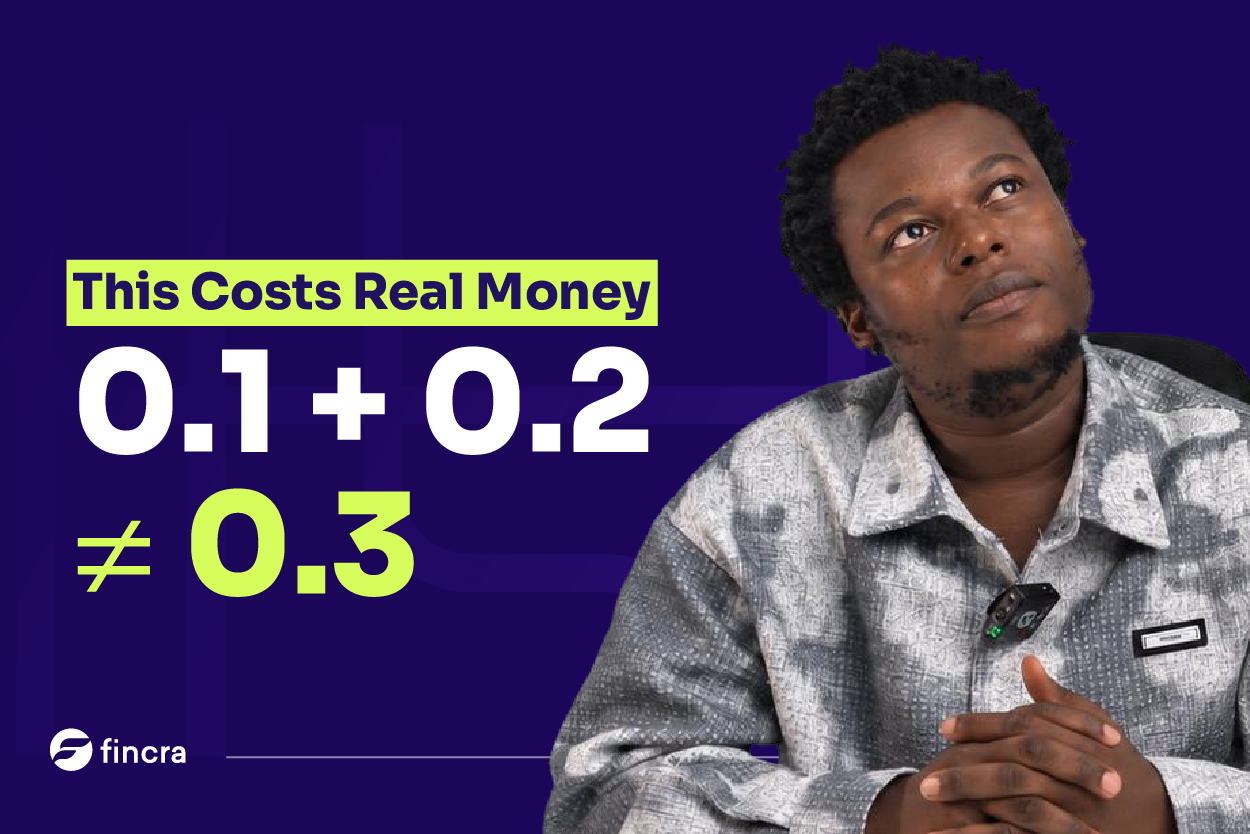
Ask a computer to add 0.1 and 0.2. It won’t give you 0.3. Now imagine that happening to your money, thousands of times a day. Fincra’s Engineering Lead breaks down why and how fintechs design around it. Watch the full breakdown.
Companies
Woolworths is building dark stores for fulfilling orders in South Africa

Woolworths, the South African retailer, is building new stores you might never walk into. In fact, you’re not supposed to.
The South African retailer is expanding its network of “dark stores,” fulfillment centres built entirely to pick and pack online orders, as more customers choose to shop for groceries on their phones.
What’s happening? Woolworths opened its first food dark store in Cape Town in 2024 and has since added another fulfillment centre in Wynberg. The company said these facilities should improve delivery speed, reliability, and product availability while taking pressure off its physical stores.
Why build a store nobody can enter? Online grocery shopping creates a fulfillment problem that gets expensive as orders grow: staff picking online orders compete with in-store shoppers for the same shelves; delivery drivers need somewhere to collect orders and retailers have to keep enough inventory available for both.
Dark stores separate those operations, giving retailers tighter control over inventory, faster picking or sorting, and a dedicated handoff point for deliveries. Food delivery companies have used the same logic. Nigeria’s FoodCourt, which paused operations in March, used dark stores as a key part of its inventory. Chowdeck, a Nigerian on-demand delivery company, also uses dark stores for quick commerce purposes to fulfill customers’ shopping needs.
The economics only work when order volumes and customer density are high enough to spread the fixed costs of a dedicated facility across enough deliveries. Woolworths’ numbers suggest it is getting closer to that point: revenue for Woolies Dash, its on-demand delivery service, grew 19.6% in the year to June, while overall online turnover rose 5.7% to R8.22 billion ($502 million). Online now makes up 7.3% of Woolworths Food sales.
Zoom out: Online grocery has spent years trying to prove that customers will pay for convenience. If that weren’t working at scale, traditional retailers like Woolworths would not be aggressively scaling dark stores. But here’s our big-brain thinking: if more retail chains, which have deeper runways because they source inventory directly and control pricing, start building their own fulfillment networks, what would that mean for e-commerce and delivery platforms such as Jumia?
If more retailers decide they can own the customer, order, and fulfillment layer themselves, delivery platforms could be left fighting for a smaller slice of grocery delivery. But that’s only a hypothetical scenario. Platforms can still build around other categories beyond grocery.

That symptom you just searched online? A Nigerian-licensed doctor can see you by phone or video — no waiting room, no half-day at the hospital. IKEA Health is live..
companies
JPMorgan hires Sub-Saharan Africa lead to deepen its investment banking push

JPMorgan is putting more weight behind its African business. The US banking giant has appointed Edward Bell as its head of Sub-Saharan Africa investment banking. Bell, who joined JPMorgan in 2017, will oversee investment banking across the region, including mergers and acquisitions (M&A), debt, and equity capital markets, leading a market where global banks seem to be competing for deals.
What’s happening? The appointment comes as JPMorgan expands its footprint across Africa. The bank has opened offices in Kenya and Côte d’Ivoire in recent years, while maintaining its Lagos and South African offices, which serve clients across its commercial and investment banking and asset management businesses.
JPMorgan also continues to recruit globally and locally across its investment banking business; its LinkedIn page currently lists a Vice President role in financial reporting and legal entity control in Lagos, Nigeria, another sign that the bank continues to build its local operation.
Explain like I’m new here: Investment banks make money by helping companies and governments raise money, advising them when they buy or sell businesses, and arranging deals such as bond and share sales. When deal activity picks up, banks compete for those mandates because they generate fees. They also make money when private companies raise capital, businesses merge, and generally when investors put money to work.
State of play: JPMorgan’s investment banking business covers M&A, capital raising, and financing, giving it several ways to participate as African capital markets recover. Investment banking fees in Sub-Saharan Africa reached an estimated $289 million in H1 2026, up 26.4% from the previous year, according to data analytics firm LSEG. M&A value more than quadrupled to $50 billion, while bond issuance rose 62.2% to $29.6 billion.
Zoom out: JPMorgan is not the only global bank moving people around Africa. In May, Citi hired André Ross, a JPMorgan executive, to lead its South African banking business. Deutsche Bank and Absa have also tapped senior dealmakers to lead their operations in the country. The talent moves matter because banks need local relationships and dealmaking expertise to compete for mandates in Africa’s next investment cycle.

True scale demands moving beyond surface-level integrations to robust execution. We’ve filtered the noise out of Moonshot 2026, optimising the conference strictly for high-calibre connections between startup founders, global financial operators, enterprise leaders and individuals rewiring Africa’s technical frameworks. Join us on October 28 & 29, 2026. Get your ticket.
capital market
South Africa’s stock exchange is grooming 10 tech SMEs for the public market

The Johannesburg Stock Exchange (JSE) and South Africa’s Technology Innovation Agency (TIA), a government agency that helps develop and commercialise technology, have selected ten technology small and medium-sized enterprises (SMEs) for a 16-week pilot programme to prepare them to raise capital.
Explain like I’m new here: The JSE needs a pipeline of tech companies that can grow into future listings. So, is it trying to “catch them young”? This idea has some history. In 2022, the exchange considered launching a dedicated technology board with more flexibility for high-growth companies to raise capital. The proposal won support from 66% of respondents in its consultation, but the JSE later froze the plan over concerns that a sector-specific board could fragment the market.
State of play: Now, it looks like the JSE is taking a different approach to the same problem. Instead of waiting for tech companies to become big enough to consider a listing, it is getting involved earlier, building relationships with them while they are still growing and potentially creating a pipeline of future listings.
Like most African stock exchanges, the South African bourse wants more companies—especially tech startups—to go public. Specifically, the JSE is also seeking to restore its former glory. Since the 1990s, JSE listings have shrunk from over 800 to about 280 today, with the last major pure-tech initial public offering (IPO) being lending fintech Optasia in November 2025.
What the ten chosen ones should expect: JSE and TIA will help them sharpen their business plans, prepare to pitch investors, improve their technology, and get ready to raise money. Each company will leave with an investor-ready pitch pack and opportunities to meet investors and potential partners. There’s no grant involved. But the training could prepare startups to raise capital now and, eventually, list on the stock market.
The bigger picture to watch is whether the programme gives the JSE a stronger pipeline of companies that can go public in the near future. Since the exchange can’t conjure new listings out of thin air, it has to help create companies that have rational 5- or 10-year plans (or hope?) to list on the exchange. Speaking of which, who knows, it could’ve been a selection requirement.
CRYPTO TRACKER
The World Wide Web3
Source:

Coin Name
Current Value
Day
Month

+ 0.13%
– 16.33%
+ 0.22%
+ 8.80%
– 0.11%
+ 7.93%
– 0.02%
+ 14.65%
* Data as of 06.42 AM WAT, September 30, 2026.
Opportunities
- The Citi Foundation is offering $500,000 grants to 50 organisations that help low-income young people build AI and other job skills. The grants can support programmes that teach skills such as prompt engineering and digital content creation, help young people find jobs, provide access to devices and software, or add AI tools to existing employment programmes. Applications close on October 6, 2026, at 5 p.m. Lagos time. Apply here.

- My Life In Tech: 48 rejections later, Bode Roberts went from job seeker to opportunity builder
- MTN’s US terrorism cases move forward after judge rejects appeal
- Rising Tide Africa backs used cooking oil firm Ororo Waste with $1 million
Written by: Emmanuel Nwosu and Yemi Kareem
Edited by: Emmanuel Nwosu & Ganiu Oloruntade
Want more of TechCabal?Sign up for our insightful newsletters on the business and economy of tech in Africa.
- The Next Wave: futuristic analysis of the business of tech in Africa.
- Francophone Weekly by TechCabal: insider insights and analysis of Francophone’s tech ecosystem
P:S If you’re often missing TC Daily in your inbox, check your Promotions folder and move any edition of TC Daily from “Promotions” to your “Main” or “Primary” folder and TC Daily will always come to you.