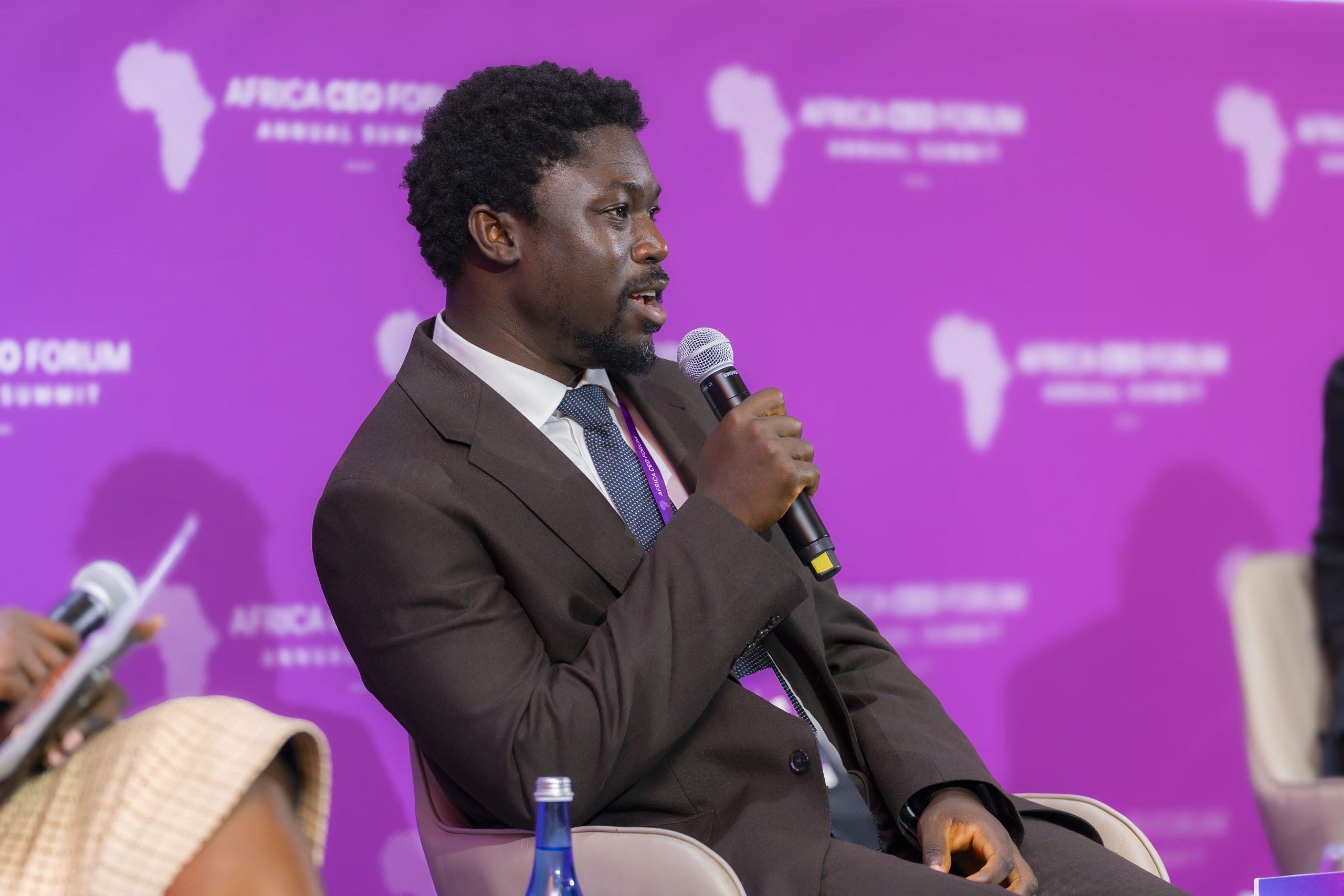
In a side room at the Africa CEO Forum in Kigali, Rwanda’s capital, on May 15, Yango Group Chief Business Officer Adeniyi Adebayo shared a brief history of the company’s expansion with an audience of business executives and investors.
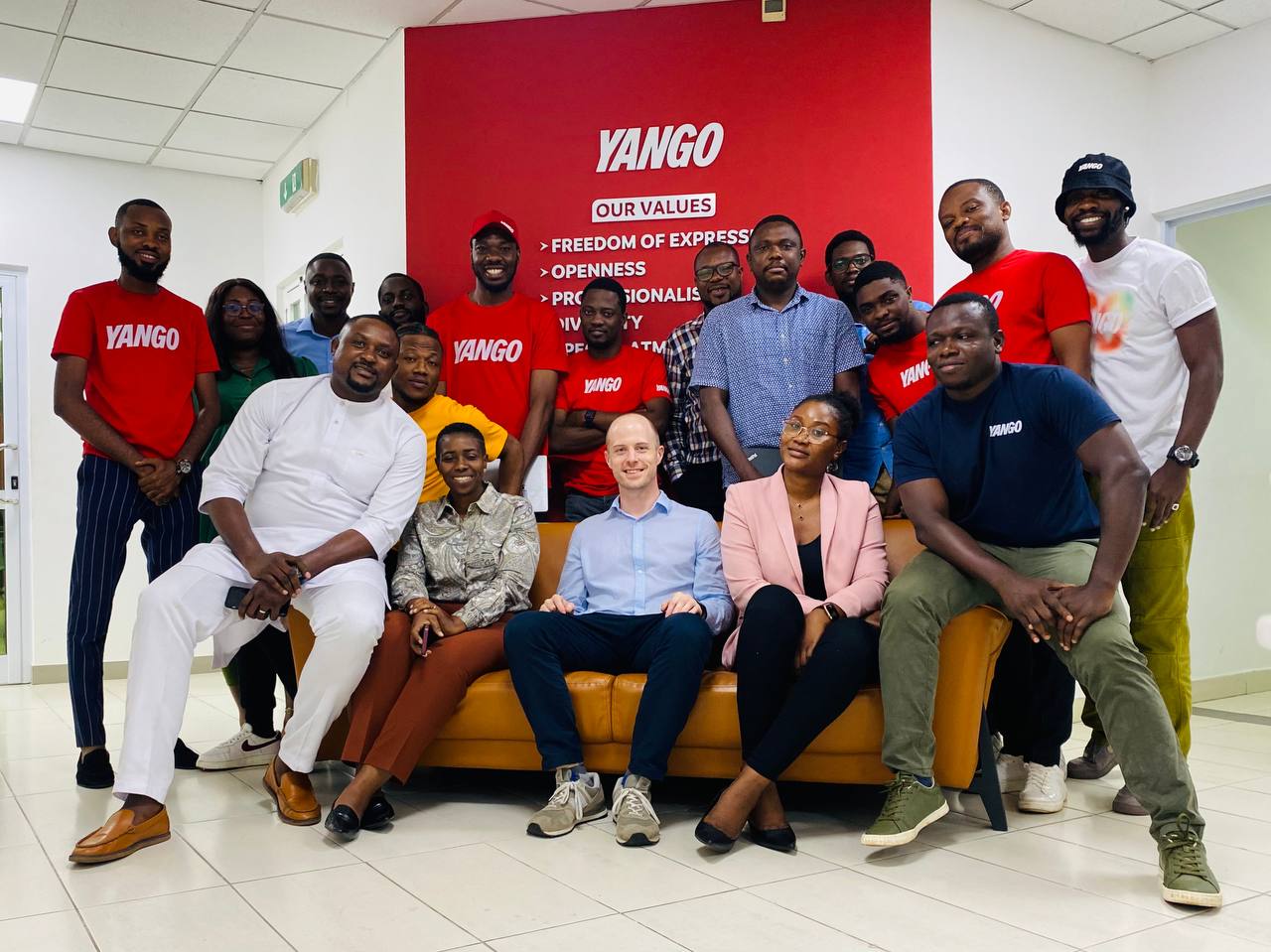
“The name Yango was actually coined in Ghana after a local word that means ‘let’s go,'” he said. “When we showed up in 2018 to set up this business, the first thing we recognised is that we have to be a local brand. Today, that story has grown across 35 markets. I started with a group of six other people building this business. We built multiple products; generally, we have got over 70 different product lines.”
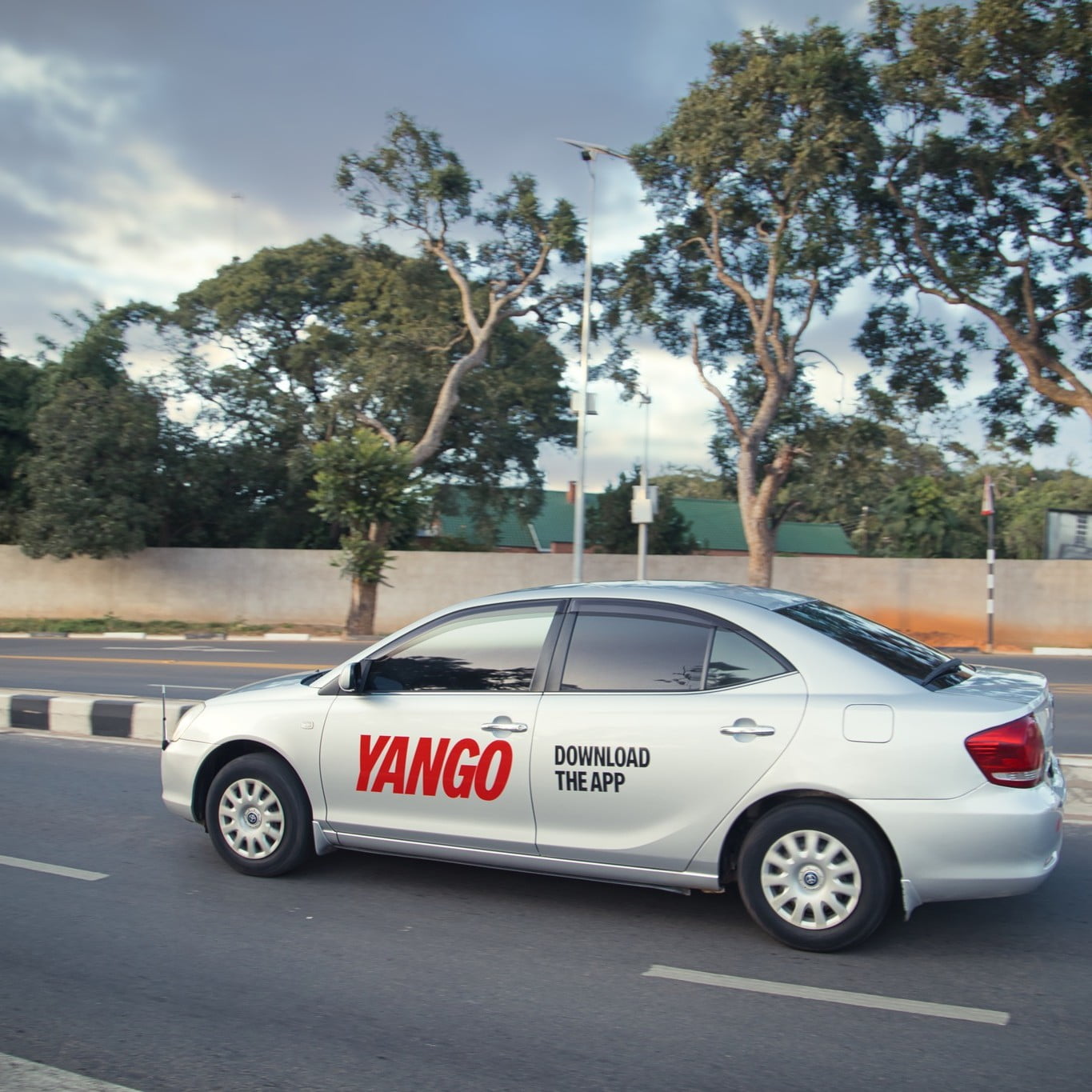
Yango Group is a Dubai-headquartered technology company that operates the Yango ride-hailing platform, one of the fastest-growing mobility services in Africa, with operations spanning markets including Côte d’Ivoire, Senegal, Cameroon, Zambia, and the Democratic Republic of Congo. The company says it has completed 340 million rides across Africa and has over 500,000 drivers on its platform across the continent.
It also operates delivery, entertainment, and e-commerce services, and is pushing into mapping, logistics routing, and cloud infrastructure.
However, the ride-hailing label has stuck, even as the business says it has moved well beyond it. That tension, between what Yango is known as and what it is trying to become, was the subtext of everything Adebayo discussed in Kigali.
On May 18, three days after those conversations, Yango Group formally announced the launch of Yango Tech in Africa: a business-to-business (B2B) and business-to-government (B2G) technology arm that packages AI consulting, smart city infrastructure, healthcare digitisation, and financial services platforms for businesses and governments across the continent.
The city thesis
To understand Yango Tech, you first have to understand how Yango Group thinks about markets. The company’s framework is not built around countries, but cities.
“There is a fundamental belief, and this is actually very personal to me, that cities are the engines of growth on the continent,” Adebayo, who is also CEO Africa at Yango Group, told me during a wide-ranging interview on the sidelines of the forum.
The argument he makes is statistical. Cote d’Ivoire has a population of roughly 34 million, but its economic activities are overwhelmingly concentrated in Abidjan, its capital city of 6.3 million people. No other city in the country has more than one million residents. Abidjan remains Côte d’Ivoire’s dominant economic hub, with the city’s port accounting for around 60% of national gross domestic product (GDP), according to the World Bank.
“If Abidjan is producing, say, half the GDP, understandably, it means that the GDP per capita of Abidjan is not the GDP per capita of Côte d’Ivoire,” Adebayo said. “And that completely flips what is possible in terms of what are the needs and the demand of the people.”
The implication, for Yango, is that city dwellers in Abidjan are not poor-country consumers. In terms of their consumption behaviour and service expectations, they are closer, in Adebayo’s view, to residents of Dubai than to fellow Ivoirians in rural areas.
“They are in the same country, but they are completely different spaces,” he said.
That thinking informs Yango’s investment thesis. According to Adebayo, the company’s entry strategy in any market begins with identifying the densest node of commercial activity, building profitability there, and then using that anchor to subsidise expansion into secondary and tertiary cities.
“If you don’t build a business that becomes profitable in Lusaka, you will not be able to build a sustainable business for the Copperbelt,” he said, using Zambia as an illustration.
“So, for us, the idea is basically your beachhead market always has to start from where can I build density fast, and I can build a very profitable pool, and then that profitable pool becomes what subsidises the rest of the country.”
The model, he acknowledged, is not without tension. Urban-first investment risks leaving rural populations behind, at least in the near term. But Adebayo’s counterargument is that the alternative, spreading capital thinly across an entire country from the start, usually produces an unprofitable business that eventually serves nobody.
Perception arbitrage
In 2018, most global tech companies expanding into Africa followed a familiar route: Nigeria, Kenya, South Africa, and Egypt. The four markets dominated investor attention and served as the continent’s largest digital economies. Uber was already established across several of them, while Bolt was expanding aggressively. Yango took a different path. It launched in Côte d’Ivoire.
“Nigeria was the first market we visited,” Adebayo said. “Every person that came into the continent then all went to Nigeria, Kenya, South Africa, Egypt, but we were also in Nigeria. But we thought then the value proposition that we had and the opportunity that was there in Côte d’Ivoire was a lot more promising and enticing than Nigeria, but you couldn’t have taken that choice sitting at a desk in Dubai.”
The phrase he uses to describe this is “perception arbitrage.” The idea is that received wisdom about African markets, which countries are promising, which are too risky, which are too small, lags reality by years.
“I always say our game is a perception arbitrage game,” he said. “The problem with that perception arbitrage is, if I tell you that the cafeteria is closed, typically, you are not going to double-check me. You just take it as a fact. The cafeteria is closed. I told you, and it’s the same thing across all African markets. People have certain stories that have been said and repeated.”
The example he cited was Ethiopia. Yango entered in 2023, before the current wave of institutional interest in the country. Since then, the government has accelerated efforts to liberalise the economy, culminating in the launch of the Ethiopian Securities Exchange, which attracted 48 local and foreign institutional investors and raised more than twice its target in 2024.
“We’ve been in Ethiopia for almost three years now; everybody’s opening up to Ethiopia,” he said. The same pattern held in Venezuela, where, according to Adebayo, Yango established operations before American companies began paying attention.
The consistent thread is on-the-ground presence. “If you are an operator that’s building Africa, get on the ground,” he said. “Things are not always as they say.”
He also made a pointed observation about the structural blind spots of Anglophone founders and operators. “If you’re like an Anglophone founder, an Anglophone operator, you are so locked out of almost all of whatever is happening in Francophone Africa,” he said.
The data supports the structural critique. According to Partech’s 2024 Africa Tech Venture Capital report, Francophone African countries received only 10% of tech venture funding on the continent in 2024, down from 15% in 2023, and remain heavily underrepresented relative to their population and economic weight. The ‘Big Four’ markets—Nigeria, Kenya, Egypt, and South Africa—accounted for 67% of total funding that year.
Navigating the regulatory maze
Operating across more than 35 markets means operating across more than 35 distinct regulatory environments, with different rules on labour, taxation, data, mobility, and financial services. Yango’s answer to fragmentation, according to Adebayo, is not lobbying, but co-creation.
The Côte d’Ivoire tax story is the one he tells most readily. In December 2021, the Ivorian government adopted Decree No. 2021-860, bringing ride-hailing platforms under a formal regulatory framework. The move followed mounting pressure from traditional taxi operators, who argued that ride-hailing drivers were operating under less stringent rules than licenced taxi services.
According to Adebayo, the initial proposals would have entirely pushed ride-hailing drivers back into the informal economy. He said Yango convened a workshop with the government, brought in consultants from PwC and EY to co-design an alternative. The outcome, as he tells it, was a self-employed regime in which drivers pay around 3% to 4% of their income, with Yango acting as the tax collection agent on behalf of the state.
“When the drivers start understanding that there is actually a carrot at the end of the stick, now it is a lot easier for you to convince them that you know you’re paying a 1% or 2% or 3% or 4% because he knows I’m paying those taxes because there is something in it for me,” Adebayo said.
The Côte d’Ivoire framework has since become a reference point that Yango carries into other markets. “Because we’ve done it in Côte d’Ivoire, now Senegal sees it. ‘Oh wow, how did you do it in Côte d’Ivoire?’ Then we explain,” he said.
The thinking is that regulatory knowledge compounds across borders in ways that raw capital cannot. Every new market Yango enters inherits the policy groundwork laid in the previous one, shortening what Adebayo calls “time to market for regulation.”
He said he would welcome a regime of mutual recognition of regulations across African countries, where compliance demonstrated in one market could serve as a provisional licence in another.
“If I think that regulation in a particular aspect is very strong in one country… that mutual recognition means you give people like that opportunity of a sandbox story, while you allow them to sort of be able to want and provide services on time.”
That luxury, he acknowledged, does not yet exist.
Yango Tech: Opening the stack
Yango Tech’s formal launch is the commercial expression of everything the company has built for its own operations. Over eight years and more than $150 million invested across the continent, Yango has built proprietary mapping and routing technology, data infrastructure, payment systems, and public transport tracking tools, not because it wanted to be in those businesses, but because the markets it operates in required them.
“Yango Tech is basically all our B2B and B2G solutions packed into one,” Adebayo explained. “We’ve sort of been building technology for a long time; we’ve also built solutions in places that don’t exist. When we start discussing with policymakers, and we tell them about this self-employed regime, and they say, ‘Okay, but how do I collect it? How do I process it?’ We’re like, ‘Okay, we can build you a platform that allows all the drivers to pay easily.'”
That logic—solve your own problem and then productise the solution—is how Yango Tech was born.
The B2G portfolio covers health records, tax and finance platforms, and tools for formalising informal sector workers. The B2B portfolio includes the routing and logistics technology Yango developed for its own ride-hailing and delivery operations, now made available to fast-moving consumer goods (FMCG) companies, logistics operators, and port authorities. The company also says it operates a data centre in Serbia, giving it cloud computing capacity to underpin enterprise clients.
Yango noted in a statement shared with TechCabal that it has already begun deployment in Mozambique and South Africa, with projects spanning mobility, healthcare, and electronic commerce.
The timing is deliberate. McKinsey has estimated that generative AI could unlock between $61 billion and $103 billion in annual economic value across Africa. GSMA put the mobile sector’s contribution to Africa’s economy at $220 billion in 2024, with projections of $270 billion by 2030 as digital services and enterprise technologies expand.
Yango Tech is not the only company that has seen those numbers, but it may be one of the few with the existing infrastructure relationships to act on them quickly.
The public transport application illustrates the compounding logic clearly. “If I stand at a bus stop in Abidjan today, I don’t know what bus is coming. When is it coming? Will there be space inside it? But if you think about my fundamental business as the ride-hailing business, I know where all the cars in the cities are, right? And it is a very easy extrapolation for me to know where the buses in the cities are,” Adebayo said.
The tier two opportunity
One of the less obvious insights Adebayo shared was about Africa’s second-tier cities, and why they may represent the continent’s most underpriced opportunity right now. In most African countries, with the notable exceptions of Nigeria and South Africa, urban population is concentrated in a single dominant city.
Ghana has Accra and, at a significant distance, Kumasi. Cote d’Ivoire has Abidjan and then a long tail of cities below one million. Namibia’s capital, Windhoek, holds nearly 500,000 people, with most other settlements in the tens of thousands.
What Yango has observed is that many of these secondary cities are undergoing what Adebayo describes as a “renaissance,” driven by commodity booms, the spread of mobile connectivity, and deliberate infrastructure investment.
The company says it monitors these shifts not through population census data, which lags, but through proxies: WhatsApp commerce volumes, Facebook Marketplace activity, and mobile data usage.
“If you have a tier-two city that is actually really, really accelerating, you start seeing a lot more WhatsApp commerce and a lot more Facebook Marketplace commerce, and it gives you pointers as, okay, something is happening,” he said.
Bouaké, Côte d’Ivoire’s second-largest city, is the proof of concept. Yango launched in 2022 shortly after Abidjan, saw almost nothing for three years, and then watched it become one of the company’s best-performing cities. The lesson, according to Adebayo, was patience, but also method.
“For the last three years, this is one of our best-performing cities, because again, there’s just…” he said, before trailing off, leaving the sentence open, in the way operators do when a data point makes the case better than words can.
On Africa’s tech moment
Adebayo is carefully optimistic about what technology means for the continent, but his optimism is structural rather than evangelical. Asked for his view on where African tech is heading, he does not reach for the standard talking points about a leapfrog moment or a demographic dividend waiting to be unlocked. He frames it as a convergence.
“I am very bullish,” he said. “We’re lucky because we have a continent that will consume, whether or not we like it or not. It needs to consume, and we’re very lucky that at this point, people are figuring out different ways to make intelligence distributed. So, if you think in the age of AI, what is distributed a lot is actually it’s no longer where there is an expat from Europe, China, or the US. Everybody carries intelligence in their pockets today.”
What remains scarce, in his reading, is not intelligence but the human energy of execution, of people willing to build rather than wait.
“What needs to be abundant is now energy, and I mean energy of execution of people that are hungry and want to do stuff, and we have an abundance of that. We have an abundance of young people who are ready to do stuff,” he said.
The next phase, as he describes it, is channelling that energy through tools that no longer require a specialist to operate, and building the infrastructure, from ride-hailing platforms to government digitisation tools, that makes execution possible at scale.
Whether Yango Tech can capture a meaningful share of that moment is an open question. The B2B technology market in Africa is crowded, and the company will face competition from global cloud providers, regional fintech players, and a growing cohort of homegrown enterprise software companies.
What Yango will be pitching is eight years of regulatory relationships, proprietary infrastructure data, and a credibility that comes from having stayed when others visited and left.