Ask anyone who’s had to call for emergency help in Lagos what happened next, and you’ll get a version of the same story: a number that sometimes takes forever to connect, a dozen calls, and then a miraculous person with a car or who knows someone who does. Ambulances exist, but nothing coordinates them.
Medwaka’s founders ran into this problem from the other direction. They started out trying to solve blood donation shortages for pregnant women in Ondo State, and kept hitting the same wall: nobody could get from the point of distress to the point of care. So they rebuilt the company around solving that instead: a dispatch and coordination layer sitting on top of hospitals, ambulances, and first responders, which already existed individually.
And that right there is the part that’s easy to miss in a founder story. They weren’t just solving an ambulance shortage; they were fixing a coordination failure that a functioning public system should have solved decades ago.
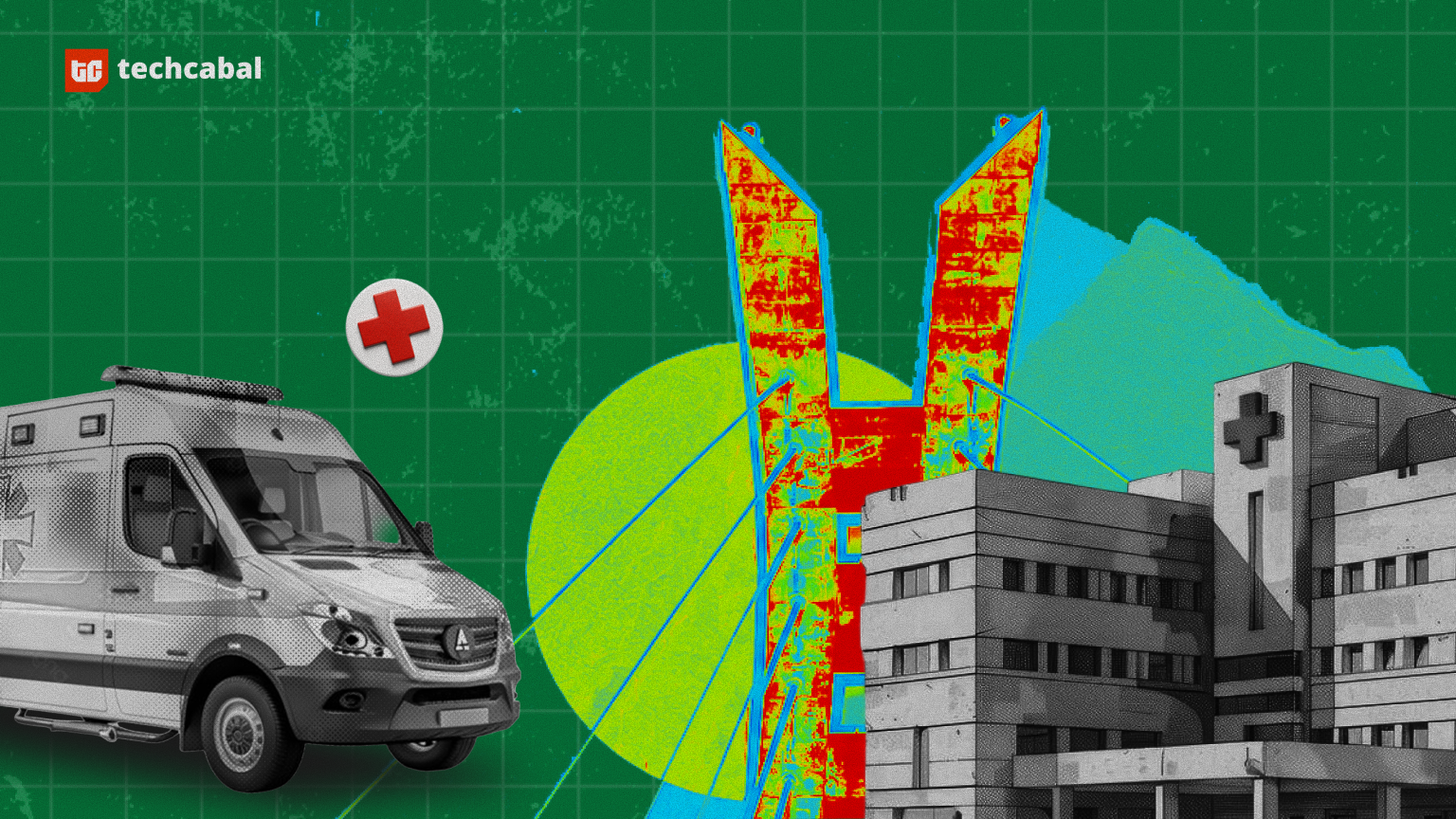
It’s essentially the same pattern with money. Nigeria’s primary healthcare centres are chronically underfunded, and fixing that starts with how badly fiscal policy misses the people who need it most. Money gets budgeted, but is not always released. When it is, it may still fail to reach the facility level in ways that translate into patient care. TC Insights went looking for where people go when that happens and found an entire informal healthcare economy: patent medicine vendors, unlicensed clinics, and community-level caregivers quietly absorbing the patients the formal system was supposed to catch.
Donor money tells a similar story; the difference is that it is faster and more visible. In the past two decades, most of Nigeria’s health financing came from external partners. With government spending on health far below the African regional range of 2–12%, that dependency is not being treated as a problem to fix.
USAID pulling back in 2025 showed the healthtech sector in real time how much of its credibility and connective tissue had been running through one external pipe. We covered the impact of USAID leaving—not just money, but the partnerships that gave startups legitimacy with public health programmes. A second piece went further and found that disease surveillance systems themselves went dark when the funding line closed, as nobody had built a version of that infrastructure that didn’t depend on donor funding.
Issues like sex education, which even policy meetings skirt around, despite evidence of its importance, play a key role in understanding healthcare in Nigeria. Access to contraceptives is still gated by stigma more than by supply, sex education barely exists in Nigerian schools, and the question of who actually gets to decide what happens to a woman’s body in this country is still, functionally, not the woman. Whispa, a Nigerian digital platform providing young people with confidential and affordable access to sexual and reproductive healthcare, built its entire product around that gap years ago: anonymous, judgment-free access to sexual health information for girls who’d otherwise have nowhere to ask. But fundamental issues still exist.
Founders have routed around the problems, but they are not to blame, as it is almost impossible to innovate around a gap the government cannot address without the influence of foreign funds. A dispatch app doesn’t get Nigeria a functioning national emergency number. A femtech platform doesn’t get comprehensive sex education into the curriculum. What they’ve done, collectively, is leave a paper trail pointing to moments founders hit a wall the state should have removed, and that’s a more specific indictment than most policy critiques manage.
That paper trail is basically the whole argument of the health edition of The Nigerian Life Compendium, an initiative by Zikoko Citizen that’s less interested in health statistics for their own sake and more interested in naming, essay by essay, where the system hands its responsibilities to whoever’s left standing; usually families, sometimes founders, occasionally no one at all.