Michael M. Santiago/Getty Images
- NYC Mayor Zohran Mamdani achieved his promised rent freeze, affecting 1 million rent-stabilized homes.
- The rent freeze aims to control costs for NYC renters, starting October 2026, amid rising expenses.
- Critics argue the rent freeze may increase landlords' financial strain and impact property upkeep.
Zohran Mamdani's rent freeze is now official, a big win on a central campaign promise six months into his term as New York City Mayor.
The city's Rent Guidelines Board approved a citywide rent freeze for one- and two-year leases in about 1 million rent-stabilized apartments, after a 7-to-1 vote Thursday. The vote will prevent price increases on more than 40% of all apartments across the city as of October 1, 2026, and will cover leases that begin on or after that date.
Landing a rent-stabilized apartment can be life-changing in a city where 43% of renter households spend more than 30% of their income on rent, including 25% that spend more than half, according to the 2023 New York City Housing and Vacancy Survey (NYCHVS).
Affordable housing was a key part of Mamdani's campaign for mayor. Along with the rent freeze, he is also advancing the Block by Block Housing Plan, which aims to construct and preserve affordable housing over the next decade.
Are you living in a rent-stabilized apartment? We'd like to hear from New Yorkers about how rising costs, taxes, repairs, or housing policies have affected you. If you're willing to share your experience, contact mros@businessinsider.com.
The policy might help a surprising set of higher-income New Yorkers, as 30% of rent-stabilized apartments are in the hands of households with incomes above $100,000, according to the NYCHVS.
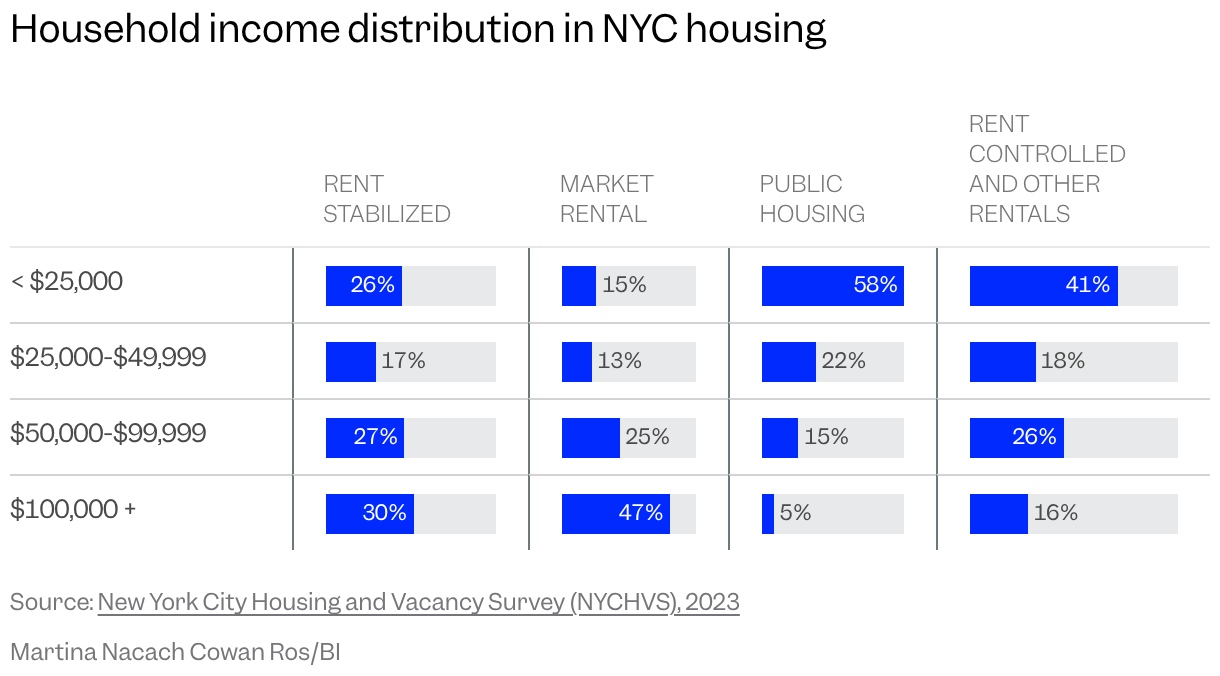
Households earning between $50,000 and $99,999, and less than $25,000 trail close behind, at 27% and 26%, respectively.
Not everyone is celebrating Mamdani's win. Jake Krimmel, Realtor.com senior economist, commented that while the policy will provide short-term benefits for tenants who are rent-burdened, the freeze will also impact landlords and real estate groups as they struggle to meet rising operating costs.
"Building owners are simultaneously cost-burdened, squeezed by rising insurance premiums, fuel costs, and property taxes that the rent guidelines process doesn't control," he wrote. "Frozen revenues against rising costs is a math problem."
Critics also say the freeze could leave landlords with fewer resources to maintain their buildings and claim the regulation could put more pressure on market rents, resulting in higher costs for other market-priced units.
Arpit Gupta, a public member of the Rent Guidelines Board and an assistant professor of finance at NYU Stern, voted against the freeze and wrote in an article published Friday that longer tenancies and the challenge of finding stabilized units will make it harder to find housing and push many into higher-priced market-rate housing stock.
"The city's housing market is effectively breathing with only one lung," he wrote. "That pressure drives up market-rate rents."
Jumaane D. Williams, the New York City Public Advocate, applauded the board's decision and argued that while it is true there are rising costs, tenants must not take on that burden.
"Some property owners, particularly of smaller buildings, have legitimate concerns about rising costs — the solution cannot be to demand more money from tenants who simply do not have it," he wrote. "Instead, government on all levels should work to strengthen programs aimed at maintaining housing quality and providing property owners with support when needed."
Thursday's vote also met with some turbulence, as Christina Smyth, a member of the Rent Guidelines Board, resigned the morning before the vote. In a statement, she wrote the board's decision was "decided last year on the campaign trail." She questioned the board's research methodology and stated that since Mamdani appointed six of the nine board members, "everything since then has been theatre."
In a statement, Mamdani said the board had gone through "thoughtful consideration of the data." He wrote the board analyzed tenants' ability to pay, living costs, and building operating costs.
"This is a historic victory for New York City tenants," he wrote. "I'll continue working to deliver a more affordable city by building and preserving affordable housing, lowering building operating costs like insurance, and ensuring tenants know their rights."
Read the original article on Business Insider