Botswana has a financial inclusion problem that looks less like an issue of access to technology.
Mobile phones are everywhere. Financial services are available on those phones, and mobile money is widely used. Yet traditional bank accounts reach only 58% of adults.
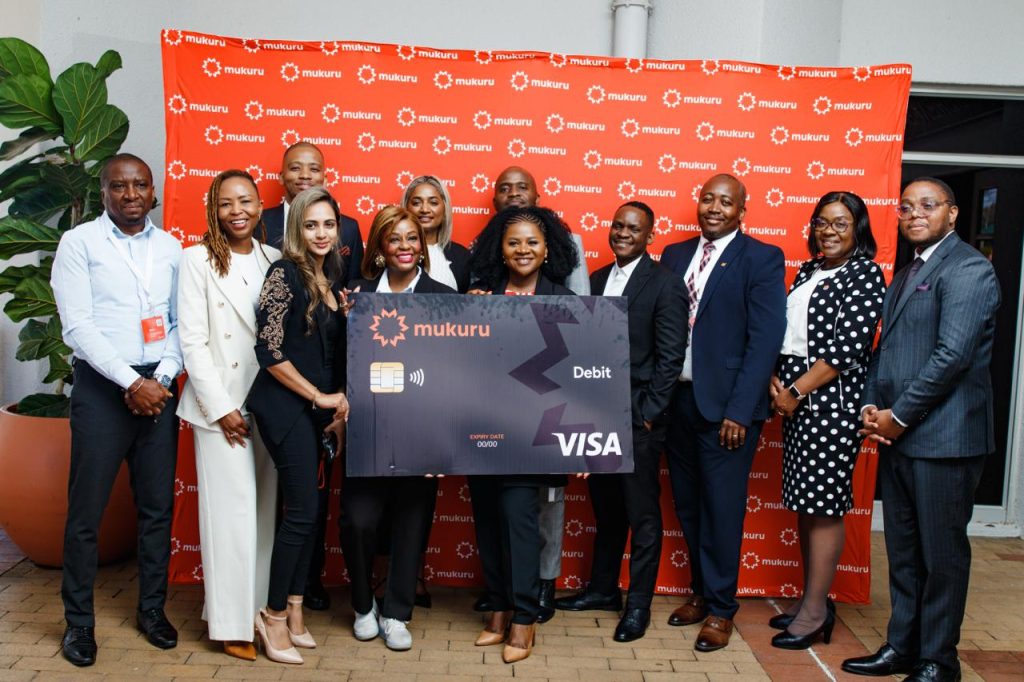
That contradiction is what makes Mukuru’s latest move in Botswana interesting. The financial services company has launched a Visa-branded Companion Card linked to its Mukuru Wallet. The card allows customers to spend money stored in their wallets for everyday purchases at Visa-accepting merchants without first transferring it into a conventional bank account.
With the Mukuru Wallet, customers already manage their money from their phones. Now, the Companion Card extends that convenience to in-person spending. The Card links directly to the Mukuru Wallet, eliminating the need to transfer funds between accounts before making a purchase. This means customers do not need a traditional bank account, while both the Wallet and Companion Card work across all mobile networks.
For consumers in Botswana, this means fewer trips to cash-out points and greater access to cashless payment options.
On the surface, it is another fintech product launch. But it signals a major shift in African financial services. Financial inclusion no longer has to begin with a bank account.
Botswana is a useful case study because its connectivity story is already mature. The country’s 2024 FinScope survey found mobile phone ownership at 94%, while mobile penetration is among the highest in Africa.
Yet only 58% of adults were banked in 2024, leaving 42% without a bank account. At the same time, 94% of adults were financially included when considering banking, mobile money, and other formal and informal financial products.
That distinction is significant because Botswana has not necessarily failed to bring people into the financial system. Instead, it shows what happens when financial inclusion starts moving beyond banks.
The bank account was built for a different customer
Traditional banking works best when the customer fits a relatively predictable profile. A salaried worker receives a regular income, has proof of address, can maintain an account and can absorb transaction or monthly fees. That model becomes less useful when income is irregular, employment is informal, or a customer lives far from a branch.
Botswana’s own data points in that direction. Among unbanked adults, 33% already use mobile money, while FinScope says people who had previously been banked were pushed out of the banking system in part by job losses. Irregular or low income and unemployment are also among the reasons people do not have bank accounts or have lost them.
An unbanked person, then, is not necessarily someone with no money, no phone or no need for financial services. They may simply have a financial life that does not fit the traditional banking product.
A market trader does not necessarily need a current account designed around a salaried worker. A seasonal worker may need a place to receive and spend money without maintaining a year-round account. Someone living far from a branch may value a wallet because it removes the need to travel for a basic transaction.
The question is whether financial products can adapt to those realities.
Botswana’s mobile money lesson
The country’s mobile-money numbers make the point clearer.
FinScope found that 75% of Batswana use mobile money. Convenience, cost and speed are among the reasons for adoption, with sending money and buying airtime among common transactions.
This is what mobile financial services do well. They eliminate the need to turn a financial transaction into a trip to the bank.

The Bank of Botswana has recognised the same dynamic. Its 2024 Banking Supervision Annual Report says that electronic payment services and mobile wallets can enable unbanked and underbanked customers to store, send, and receive money and pay bills, while creating pathways to credit and insurance.
The wallet, therefore, is not necessarily a temporary stepping stone towards a bank account. It can become the financial product itself.
That is what makes Mukuru’s Botswana launch more interesting. It is not simply adding another payment option. It shows how a wallet can serve as the starting point for a broader range of everyday financial services.
The card is not really the story
Mukuru’s Companion Card extends the functionality of its wallet into physical retail.
Customers can fund a wallet and use the linked card to pay for groceries, transport, utilities, school fees, and online purchases. The company says customers do not need a traditional bank account to use the wallet and card.
That matters because one limitation of digital wallets is their impact on how money is spent in the physical economy.
A wallet can receive, store, and transfer money, but if the customer still has to cash out before buying groceries, the digital financial experience eventually runs into the cash economy. The card closes some of that gap by turning the wallet from a place where money is received into a financial product that can also be used for everyday spending.
The broader change is that customers no longer need to become conventional bank customers to participate in digital payments. The financial product comes to the customer in a form that fits existing behaviour.
This is happening beyond Botswana
The same evolution is visible elsewhere in African fintech.
In a recent conversation with TechCabal, Serigne Dioum, CEO of MTN Group Fintech, described a similar ambition for MoMo, the telco’s mobile financial services platform.
MTN has more than 317 million telecom subscribers across its markets, but only over 70 million monthly active MoMo users. Dioum’s challenge is to turn that much larger telecom relationship into a deeper financial one.
That means moving beyond sending money. MoMo users can pay merchants, save, borrow, receive remittances and access other services. MTN processed more than 13 billion transactions worth over $330 billion in the first half of 2026, while originating roughly 18 loans every second.
Its evolution reflects different regulatory approaches. In Ghana, MoMo operates within a framework that enables mobile money providers to offer broader financial services. Botswana’s sandbox model provides regulators with a controlled environment to test digital products before a wider rollout. The challenge is turning successful experiments into scalable services.
Dioum’s argument is revealing. “Payment is not necessarily the first step. Payment is the last step.”
That is a different way of thinking about financial inclusion. The old model starts with the bank account and builds other services around it, while the newer fintech model can start with a phone, a wallet, a remittance, a payment, or a merchant transaction and build financial services around that relationship.
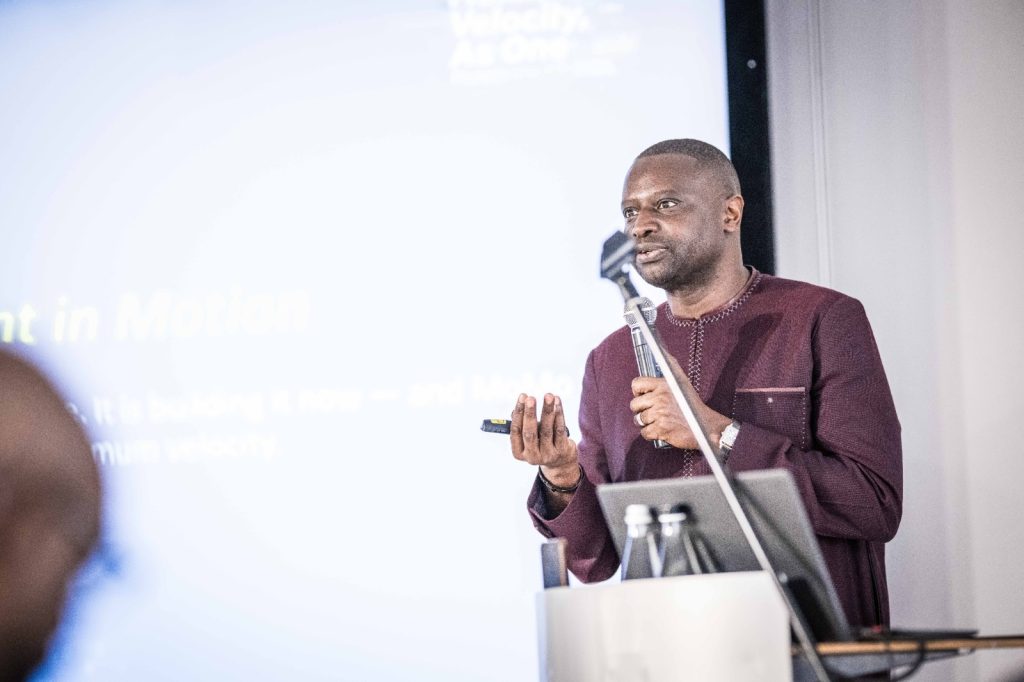
The customer does not necessarily have to enter the financial system through a bank. They can enter through whatever service they already need.
The real opportunity is the underserved
This is why describing Africa’s financial inclusion challenge simply as “banking the unbanked” may now be too narrow.
Botswana’s numbers illustrate the problem. If 42% of adults are unbanked but only 6% are financially excluded, then a large group of people are already using financial products without holding a traditional bank account.
That changes the question. Instead of asking how banks can persuade those 42% to open accounts, fintech companies can ask what those customers are already doing with money and build around those needs.
Can they receive money and store it safely, pay someone and buy goods, save and access credit, receive an international remittance, or prove that they have an income and transaction history?
The bigger opportunity is what happens next. Can that financial activity become a record that helps a customer access credit, insurance or a business product? The closer the answer gets to yes, the less important the bank account itself becomes.
That does not make banks irrelevant. They remain critical to the financial system, particularly for deposits, lending, payments infrastructure and regulation. But the customer relationship is becoming more fragmented.
A consumer might keep savings with a bank, receive a remittance in a wallet, borrow from a fintech company, and use a card issued by another financial services provider. The financial system becomes an ecosystem rather than a single institution.
The next battle is over utility
This is where the next phase of African fintech could become particularly competitive. The first wave was about access and the second about transactions, but the next is about utility.
MTN wants MoMo to become a broader financial ecosystem around its 317 million subscribers, while Mukuru is extending a remittance and wallet relationship into everyday spending. Banks are building digital products to defend their customer relationships; fintechs are using transaction histories to offer credit; and payment companies are positioning themselves as infrastructure beneath these services.
Botswana puts that evolution under a useful microscope. The country has mobile connectivity and digital financial services, yet millions of adults still operate outside the traditional banking system.
The competition is no longer simply about who can move money fastest. It is about who can become the place where customers keep, move, spend and access money, even if that place is not a bank.
Its mobile penetration shows that connectivity can be achieved without automatically solving the financial services problem. The harder challenge is designing products around people whose financial lives are irregular, informal, mobile and digital.
The danger of confusing access with inclusion
There is also a warning here for policymakers.
A mobile phone in someone’s hand does not automatically mean that person is financially included in a meaningful way. Likewise, opening a bank account does not necessarily mean the customer has access to useful financial services.
Botswana’s 2024 FinScope survey found that banking is complemented by other formal financial products, with mobile money driving much of the growth in non-bank formal services. It also found that savings through banks have declined while other formal and informal forms of saving have increased.
The implication is that policymakers may need to measure financial inclusion by what people can actually do rather than simply counting bank accounts. Can someone receive a payment without travelling, keep money securely, pay a merchant digitally, access affordable credit and save? More importantly, can they participate in the digital economy without first meeting all the requirements of a conventional bank?
Those are more useful measures of financial inclusion than whether someone has a bank card in their wallet.
The broader lesson for Africa
Mukuru’s Companion Card will not solve Botswana’s financial inclusion challenge, nor will a single wallet or payment platform. But the product captures an important change in the market.
The next generation of African financial services may not be built around convincing everyone to become a bank customer, but around unbundling the bank.
A wallet can hold money, a mobile payment service can move it, a card can make it usable, a fintech can provide credit based on transaction history, and a remittance platform can bring money in from another country.
The customer does not necessarily care which institution provides each function. They care that the system works.
For regulators across Africa, that means designing rules around how these services connect, rather than treating each product as a separate silo. Botswana is already moving in that direction. The Bank of Botswana’s regulatory sandbox is explicitly testing inclusive payments, digital banks and interoperability solutions, while its broader fintech framework calls for risk-based regulation that can adapt as technology and business models change.
That approach is significant because the next phase of financial inclusion will depend not only on bringing more people into formal finance, but on making different parts of the financial system work together safely. Interoperability, consumer protection, licencing, data security and clear rules for new business models will become just as important as getting people to open accounts.
The lesson from Botswana is therefore bigger than mobile money. Regulators may need to stop questioning how to make every customer a bank customer and start asking how to build a financial system in which customers can access the services they need, regardless of which institution provides them.
True scale demands moving beyond surface-level integrations to robust execution. We’ve filtered the noise out of Moonshot 2026, optimising the conference strictly for high-calibre connections between startup founders, global financial operators, enterprise leaders and individuals rewiring Africa’s technical frameworks. Get 20% off Early Bird tickets for a limited time.
